
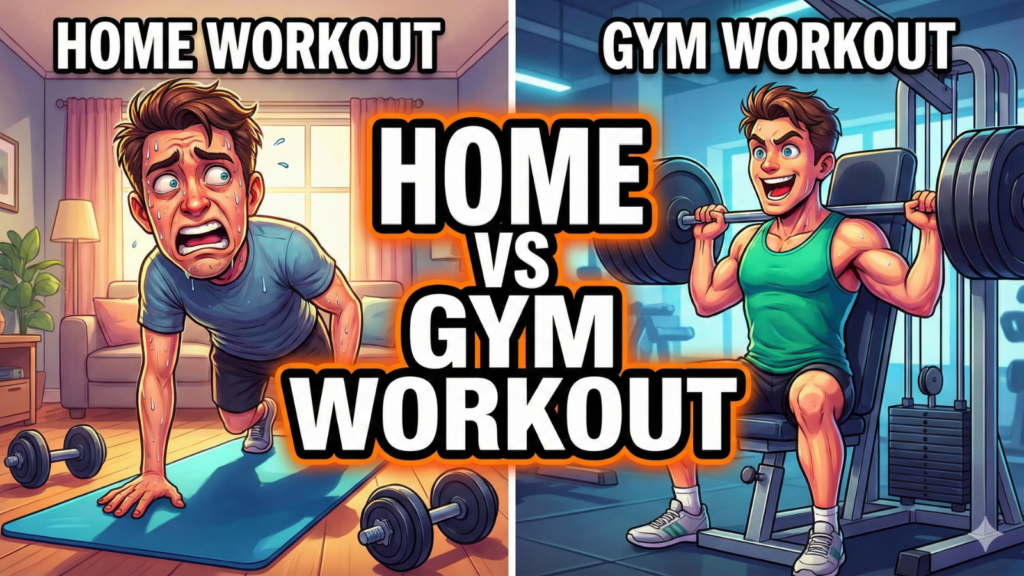
Introduction: Why This Debate Matters Today
With the advent of the year 2026, we are seeing more changes in our approach to fitness compared to any other period. With high-end fitness applications, home gym equipment, as well as training programs that are data-based, it has become more divided, with intense debate centered around Workout at Home vs Gym
In this piece, we’ll distill the essential elements, trends, and insights for you to make well-informed decisions.
Why This Debate Matters Today
The landscape has shifted quite significantly in terms of fitness. While the pandemic made many individuals realize how much easier and time-efficient it was to work out at home, gyms have responded to this by introducing tech-enhanced equipment, personalized AI training plans, and hybrid memberships.
Now, home workouts or trips to the gym are not only making a difference in physical health but also in people’s mental health, in better time management, and the eventual consistency over the long term. As fitness enthusiasts strive for long-term results, it is important to know which avenue is more effective.
Understanding the Basics: Workout at Home vs Gym
Most workout at home routines require little to no equipment or rely on bodyweight exercises. It’s convenient, flexible, and cuts out any commute. And with modern online fitness platforms, together with intelligent workout devices, home exercise programs can rival the effectiveness of going to the gym if done properly.
In contrast, Gym Workouts offer professional equipment, expert support, and a controlled atmosphere. Gyms foster discipline and social responsibility, where for some individuals, regularity is usually enhanced.
Key differentiators in 2026 include:
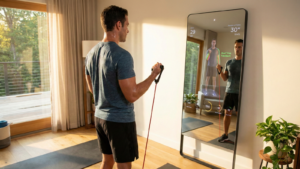
- Technology integration: Home fitness mirrors gyms with AI trainers and smart mirrors.
- Personalization: While gyms still maintain one-on-one coaching, apps can track everything from heart rate variability to recovery times now from the comfort of your home.
- Social interaction: Gyms have communities, whereas at home, you either go through virtual groups or personal motivation.
Benefits of Working Out at Home
- Convenience and Flexibility : Commutes can be skipped and routines tailored to fit the daily schedule, making exercising less stressful. For early risers, busy individuals, and parents, routines can be organized to fit their schedules.
- Cost-Effectiveness : Though investing in a couple of dumbbells or resistance bands or a smart trainer may require certain initial expenditures, it is still far less expensive than a gym membership.
- Privacy and Comfort : Many people are embarrassed in fitness centers. At home, you can progress at your pace.
- Integration with Smart Fitness : Tools Wearable technology, AI coaching apps, and online courses can be used for personalized training, monitoring, and intensity adjustments, making home workouts increasingly data-enabled.
Why Home Workouts Sometimes Fail: There may be factors like the absence of motivation, lack of equipment, and irregular patterns of practice that might impede progress or results of exercise. When there is no accountability, it might be easy to miss the workout.
Benefits of Gym Workouts
- Access to Specialized Equipment: Machines, barbells, and advanced cardio equipment do make it possible to have specific targeting during training that is normally very difficult to reproduce at home.
- Professional Guidance: Certified trainers can provide real-time feedback and correction of form, which enables one to avoid injury-especially useful during strength training and high-intensity programs.
- Social Motivation: Being in a group environment encourages accountability. Many people push themselves harder when surrounded by others who are trying to do the same things.
- Structured Environment: The gym is a place free of distractions and can be associated with fitness in the mind; thus, it may promote better consistency.
Why Gym Workouts Sometimes Fail: These could be discouraged by busy schedules, travel time, and membership costs. Besides, relying on machines without knowing programming will only limit one’s progress.
Current Trends and 2026 Perspective
The fitness industry in 2026 has undergone many changes, including:
Hybrid Models: Many gyms have partnered with home workout subscription models that are integrated with the gym service offered by the gym itself. This provides both convenience and professionalism.
Smart Exercise Equipment: AI-enabled mirrors, smart dumbbells, and virtual fitness trainers ensure home workouts are more productive than ever.
Community Engagement: Apps, social media, or online sites bring virtual fitness communities to help lessen the social disparity existing in gym exercises.
Data-Driven Progress Tracking : Wearables track recovery data, heart rate zones, sleep, and calorie burn to guarantee scientifically optimized workouts regardless of location.
Practical Tips for Success in 2026
- Create Realistic Goals – This includes emphasizing progress over perfection.
- Use Technology Wisely – Smart mirrors, applications, and devices can make your daily routine the best.
- Mix Strength and Cardiac – At home, strength training using resistance bands or dumbbells can improve muscle.
- Track Progress – This is essentially using applications to track physical activity, heart rate, and trends.
Conclusion: Personal Choice Matters
Now, when we look to the year 2026, exercising at home compared to exercising at the gym is no longer about which one is better, as it will come down to what suits your lifestyle.
Remember that fitness doesn’t mean weight training, burning off calories, and so on. Fitness involves developing habits, boosting your mood, and creating a lifestyle. So, whether you choose doing it at the comforts of your own home or from the gym, the best exercise routine would be the one you stick to.
Motivational Morsel: Think small, be steady, and leanness into technology. Your fitness journey for 2026 needs to be smarter, not harder.
NOTE: This is for educational purposes only. Not medical advice. Consult a doctor for health concerns.