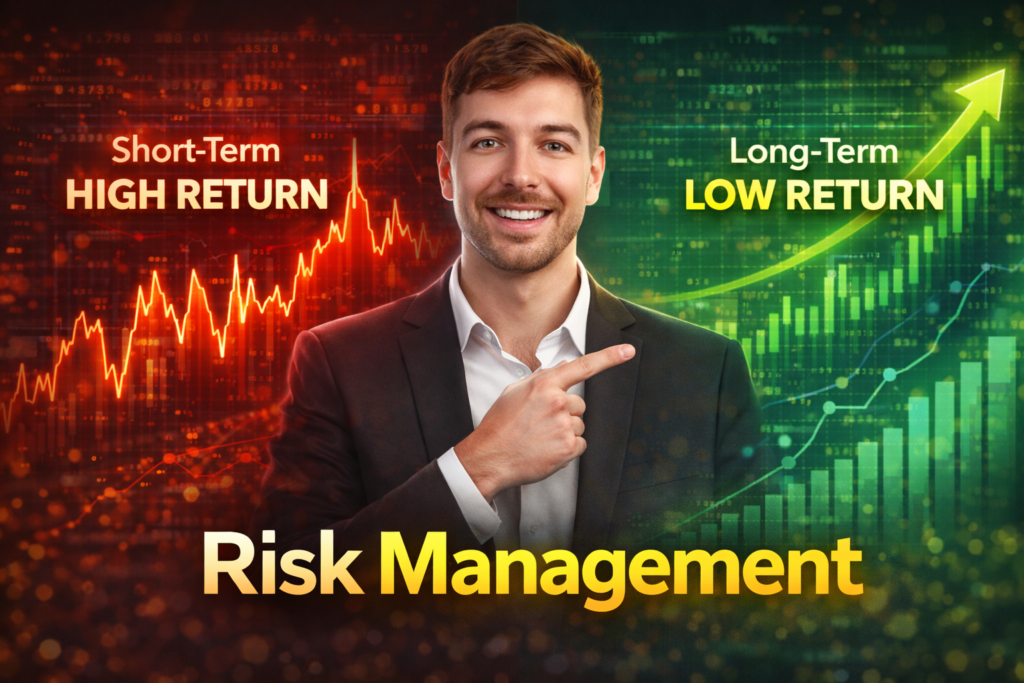
Understanding Risk Management in Personal Finance: The Shield Before the Sword
By Naman | Risk Management | January 23, 2026
In commodity trade, my philosophy, which I live by, comes in the form of an age-old saying: “There are old traders and there are bold traders, but there are no old, bold traders.”
Earlier on in my career, my single-minded focus was on returns. I was desperate for those 50% year-on-year returns, those 10- and 20-baggers. I was a sprinter when it came to my personal finance, aggressively investing my savings in those stocks and avoiding things like investing in insurance and cash.
Then, life intervened. A sudden medical emergency struck when the market was down by 20%. I was forced to liquidate my “successful” stocks at a loss to pay the bills. That was when I learned the hardest of lessons: Making money is easy; keeping money is hard.
That is the very spirit of Risk Management. It’s not just for hedge funds on Wall Street or the day trader that I am; it forms the backbone of every successful personal finance plan. Whoever builds in 2026 without his risk management is not building a castle; he is building a house of cards.
Now, let’s break down how to professionally manage risk in your own life, moving beyond simple savings and into strategic wealth protection.
The Basics of Risk Management: It’s Not About Avoiding Risk
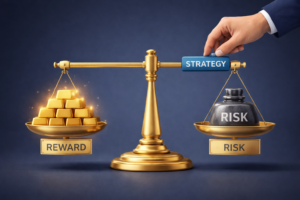
First, dispel a myth: Risk management is not about complete avoidance of risk. If you keep all your money in a savings account, then you are avoiding market risk, but you are accepting inflation risk-life causes your money to lose purchasing power.
True risk management involves an approach where one finds out the potential threats to their financial health and sets up systems to deal with such risks.
Within my suggested economic management system, I group risks into three categories
-
Market Risk: The danger of lowering money in an expense, such as when the stock exchange collides.
-
Liquidity Risk: Liquidity risk occurs when you are unable to have your cash when you need it, e.g., money invested in real estates.
-
Personal Risk: This is the personal risk to your income generating asset (e.g., unemployment, disablement, or death).
“The idea is to find a balance between those things. You want to have enough exposure to the market to make money, but you want to have enough liquidity and enough cover so that you can actually sleep at night.”
Risk Capacity vs. Risk Tolerance
That is the mark of many novices.
-
Risk Tolerance the Emotional Side : Emotional risk tolerance can mean how much you feel you can lose. A person with high risk tolerance would panic at the
-
Risk Capacity It is likewise Mathematical. It is the amount that you can afford to lose before your objectives are destroyed.
Since I am a working professional with a guaranteed pay scale, my capacity would be very high in this case. However, as a disciplined investor, I would keep a tight leash on my level of tolerance in order to prevent the behavior of a gambler from creeping in.
Portfolio Diversification Strategies: The Only Free Lunch
In 2026, diversification will require more than just investing in ten different tech stocks. In fact, this type of investing would not be diversification; it would be concentration!
The “Four-Pillar” Defense
Here is how I design my own portfolio to mitigate risk:
- Domestic Equities – The Growth Engine: Here, one could use the S & P 500, which in turn could use the S & P Total Stock Market Index as a proxy. On one end, it
- Fixed Income (The Shock Absorber): This includes bonds and treasury bills. After the stocks’ crash, bonds usually attract the attention of investors, causing the price to rise due to high demand. They tend to move when stocks move, zigzagging when
- Real Assets (The Inflation Shield): Gold and Real Estate (REITs). They are known to retain their value during times when the value of the dollar drops.
- Alternatives (The Asymmetric Bet): A small allocation (5%) into Crypto or Angel Investing. This gives us potential exponential returns not correlated with the Fed’s interest rate policy.
My Personal Rule: No individual investment vehicle will exceed 50% of my net worth. If the stock market goes on a huge run-up, I’ll sell the profits to bonds or gold, the so-called rebalancing act—this is the mechanical core of risk management.
Insurance & Emergency Funds: The Boring Safety Net
Ah, yeah, I know, insurance can get boring. But let me ask you, what’s even scarier than talking about insurance?
I utilize a strategy called ‘stop losses’ as a trader to ensure that a small loss does not translate to an enormous loss. Insurance is your stop loss in personal finance.
1. The Emergency Fund 2.0
The old advice was “$1,000 for a rainy day.” In 2026 cost-of-living terms, that is dangerous advice.
-
The Standard: 6 months of necessary expenses. Not income, expenses.
-
The Upgrade: This should not be allowed to sit in a checking account. Invest it in a High-Yield Savings Account or even a Liquid Fund. It has to be liquid immediately, in other words, on T+1 days but it must earn some interest to fight off the inflation monster.
2. Health & Term Insurance
If you currently rely on your company to provide you with health insurance, you are missing a massive component of a risk management program. It’s a certainty that if you lose a job, you’ll need health care most when you might require health care most urgently (since everything stresses us and can cause problems in various parts of the body).
-
Actionable Tip: Invest in a private Term Life Insurance Plan which should be 20 times your salary. Life insurance, when done at a younger age, is indispensable, especially when your family’s financial security isn’t tied to your pulse rate!
Tools & Techniques for Safer Investing

In addition to investing in different assets, there are certain techniques that I follow to control the downside risk on my active investments.
1. Hedging (Simplified)
While you don’t have to be a derivatives expert to engage in hedging, you have to have
-
The Concept: I own several stocks in the tech industry; I can purchase a “Put Option” or an inverse ETF based on NASDAQ as a hedge investment. A stock market crash would result in my stocks losing value; however, my Put would gain value to make up for my stock loss.
-
For Beginners: The easiest hedge for you to consider if you’re new to the topic is simply holding cash. Holding cash is an option on the volatility of the future. If you have 10-20% cash reserves, you’re able to buy when others are forced to sell.
2. Systematic Withdrawal Plans (SWP)
Risk isn’t buying; risk is selling. When you retire or want the income, selling some or all of your portfolio in a down market will destroy you (Sequence of Return Risk).
-
The Fix: Implement the “Bucket Strategy.” Maintain cash or bonds for 2 years of expenses. If the stock market crashes, you use the cash to live on while waiting for the stock market to recover, thereby avoiding selling stocks during the crash.
3. Automated Alerts
In 2026, I get AI-driven alerts on my banking and brokerage apps.
-
Volatility Alert: if one of the holdings falls by 10% over one week, a notification is sent in to review (not to panic-sell)
-
Expense Alert: If my credit card spending crosses a threshold, I get nudged. Lifestyle creep is the silent killer of your savings rate.
Summary & Best Practices: The Risk Checklist
Make a mental note to carry away just one thing if you take nothing else away from what I am about to say. This is the key to getting out of a stressful situation:
Before I consider any major financial step, I ask
The “Sleep Test”: If buying this asset will force me to check the prices every hour to see what’s going on, then that’s evidence that my position size is too big.
The Worst-Case Scenario: What happens if the investment disappears completely? Does this alter the lifestyle? If yes, I can’t afford this.
Correlation Check: Will I buy an asset that varies identically with what I currently own? (e.g., If I own Apple stock, am I buying Google stock?)
Liquidity Check: Do I have the money to take care of an emergency tomorrow without paying a penalty or making a losing trade?
“Risk management is not about being pessimistic; it’s not about being negative. Risk management is about being prepared. Risk management is the confidence you can draw from knowing that no matter whether you face the market, the economy, or life itself in its most adverse form, you are going to be able to not just survive
Protect your downside.
NOTE: This content is for educational purposes only. No financial advice or guarantees.