From a man who’s tried it… and learned the truth the hard way.
If you have ever Search on Internet “How to lose weight fast”, you probably came across this advice at least once
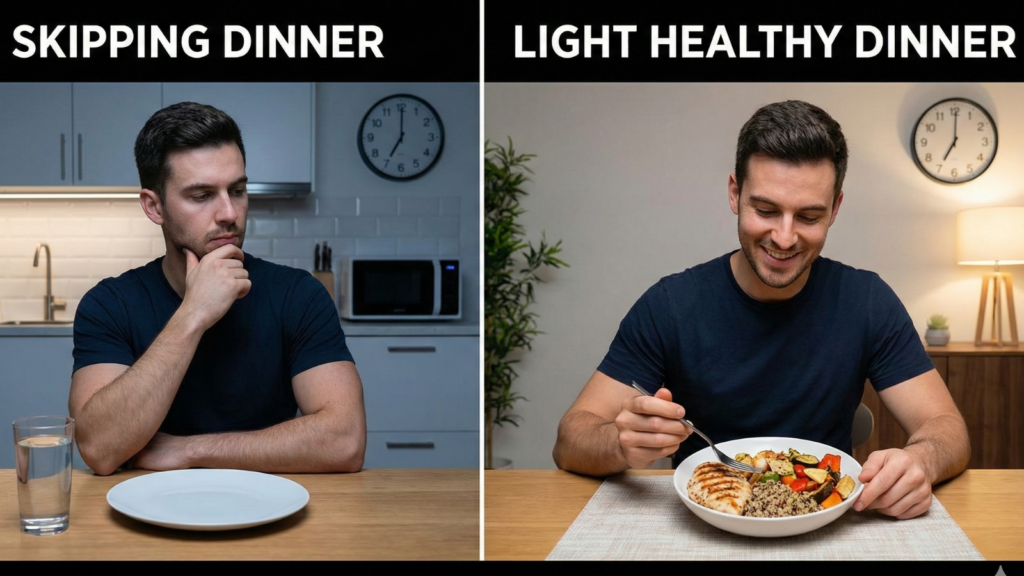
“Just skipping dinner. You’ll lose weight.”
Sounds simple, right? No calorie counting, no diet plan that is some sort of rocket science-just stop eating at night and watch fat melt away.
But does skipping dinner really help with weight loss, or is it just another fitness myth? Let’s separate myth from fact, using science, real-life experience, and common sense.
Why Skipping Dinner Became So Popular
The concept of not eating dinner generally originates from:
- Intermittent fasting trends
- The belief that “eating at night turns into fat”
- Influencers Promoting for severe calorie cut
- Busy lifestyles with dinner being
As a busy guy trying to balance work, screen time, and sleep, I can see why missing Dinner feels like a tempting shortcut.
But losing weight is not about cut-rate solutions.
Myth vs Fact: The Truth About Skipping Dinner
❌ Myth #1: Skipping Dinner Automatically Burns Fat
Fact:
Skipping dinner will only cut the calorie intake for a short period of time.
The burning of fat within the body relies on calorie balance, the metabolic rate, and consistency, not on a skipped Dinner.
If you miss dinner but:
- Overeat the next morning
- Munch on some snacks in the late
- Experience low energy levels. Avoid exercising.
- Weight loss is not going to occur.
❌ Myth #2: Eating at Night Always Causes Weight Gain
Fact:
It’s what you eat that counts the most – not when.
Eating:
- Fried foods
- Sugary desserts
- Heavy carbs
At night it can lead to weight gain – but not a light and balanced dinner. “Your body does not suddenly forget how to assimilate food after sunset.
❌ Myth #3: Skipping Dinner Improves Metabolism
Fact:
Skipping dinner will slow down the metabolism for you.
Why?
- Long periods without eating increase stress hormones.
- There can be increased breakdown of muscles.
- Energy levels plummet the following day.
A slow metabolism = harder fat loss.
When Skipping Dinner Might Work (Limited Cases)
Come on, it’s not always wrong, you know?
Skipping dinner can help in:
- You’re doing structured intermittent fasting
- Your meals earlier in the day are balanced
- You’re sleeping well
- You’re not binge-eating later
But for the average individual, especially the newbie, this is quite challenging to achieve.
The Hidden Problems of Skipping Dinner
Based on my experience and client feedback, the following typically ensues:
⚠️ Late Night Cravings
Missing dinner → Hunger rises → Late night eating starts.
⚠️ Poor Sleep Quality
It can cause disturbances in your sleep cycles if your screen time is large and your sugar levels in the body are low.
⚠️ Poor Workout Performance
Nothing to burn = weak exercises = fewer fats burned.
⚠️ Mind Burnout
To quit is a result of extreme constraint.
What Works Better Than Skipping Dinner
If the Gold is to lose weight and to do it in a manner that is healthy and maintains in
✅ Eat a light and high-protein dinner
Examples:
- Dal + sabzi
- Paneer / tofu with veggies
- Soup and salad
✅ Control Portions, Not Meals
Cutting portions is effective rather than Skipping Dinner.
✅ Early Dinner Time
Take dinner 2–3 hours before Bedtime.
✅ Focus on Weekly Calories
Consistency is better than extreme strict
Frequently Asked Questions (FAQ)
❓ Skipping dinner and helps reduce the Belly Fat?
No. Losing belly fat is achieved by the loss of fat, not by the Skipping of a Dinner.
❓ Can it is acceptable to Skipping dinner?
Yes, occasionally is just fine, but it shouldn’t become a habit!
❓ What is the best dinner to help lose weight?
Light protein-based dinner with low oil, Included with vegetables.
NOTE: This is for educational purposes only. Not medical advice. Consult a doctor for health concerns.