How to Build Online Business Trust in 2026
By Naman | Build Online Business Trust | January 23, 2026
In the stock market, trust is a form of currency. If a company wants to hide its earnings report or acts shady during an investor call, its stock would instantly tank. Irrespective of how good the product might be, if the market doesn’t have confidence in the management, the valuation goes to zero.
That’s just the principle that guides the online business world in 2026.
We are living in the age of “AI Slop”-an internet clogged with deepfakes, hallucinated articles, and faceless scam stores that vanish after taking your money. The average consumer today is cynical. They assume you are a bot or a scammer until you prove otherwise.
As a student running digital businesses, I’ve learned that Trust is no longer just a “nice-to-have” branding element; it’s the single biggest conversion factor. You can have the best ads and the lowest prices, but if your website feels “off,” your cart abandonment rate will be 99%.
Building trust today isn’t about writing “We are honest” on your About page. It’s about engineering credibility into every pixel of your user experience. Here’s how I do it.
Why Trust Matters More Than Ads
In 2023, you’ll be able to bully your way into sales with high ad spend. If you showed a product to enough people, someone would buy it.
In 2026, ad costs have skyrocketed and ad blindness is real. Users have “mental ad-blockers.” They aren’t looking at the banner; they look for the Verified Badge.
The “Trust Deficit” Economy
-
Skepticism is High: 78% of Gen Z consumers check Reddit or TikTok for “real reviews” before buying from a new website.
-
The AI Fear: Clients fear purchasing AI-generated garbage. They need to see proof a human is involved in quality control.
-
Retention is Cheap: Retention is cheap: It is expensive to acquire a customer who trusts you, but it is free to retain them. Trust builds LTV that enables one to survive the ad algorithmic changes.
Problems with Low-Trust Websites
If your online store or portfolio looks like it was ripped out of the 2022 template section, then you’re losing money. Here are the red flags that make people hit the back button:
- The “Ghost Town” Socials: If your website links to an Instagram page which hasn’t posted since last year, you look dead.
- Generic AI Copy: If your product description leads off with “In the ever-changing landscape of.” or overuses the words “unleash” and “delve”, for example, users know it’s ChatGPT. It feels lazy and fake.
- Hidden Contact Info: If I can’t find a physical address or a real support email and not just some contact form, then I know you’re probably a dropshipper who will ghost me the moment shipping is delayed.
Trust Signals Users Expect in 2026

Even in a faceless AI business, there needs to be a human element.
1. The “Human” About Page
Even if you run a faceless AI business, you need a human element.
-
The Fix: Publish video of the founder or someone involved explaining their purpose and existence. For individuals involved under an anonymous profile, consider showing your space. Show your process.
-
Example: “Hello everyone, I’m Naman. I’m a student from India, and this utility was created because I was fed up with X.” This one statement inspires trust more than ten pages of corporate speak.
2. Verified Reviews (The Blockchain Standard)
Review of text is useless as practically everyone knows how to fake it.
-
The Fix: Video Testimonials or third-party verified review sites like Trustpilot or Blockchain Verification Solutions. Embed the video feed from these sites on your homepage.
3. Payment Transparency
-
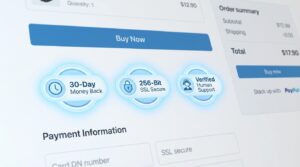
The Fix: Showcase the logos of trusted payment processors like Stripe, Razorpay, PayPal, etc. More important is showcasing the Total Cost upfront. No hidden shipping fees at the last step! Surprise costs kill trust instantaneously!
4. The “No-Spy” Data Promise
-
The Fix: In 2026, “Have a simplistic one-sentence policy that appears right below where people sign up for emails with you: ‘We don’t sell your data. We don’t spam. Unsubscribe in one click.'”
Branding vs. Selling Mindset
There has been a major change in what successful entrepreneurs think today.
The Selling Mindset: “How can I trick this person into giving money to me right now?”
-
Result: High refund rates, mad emails, zero repeat customers.
The Branding Mindset: “How can I fix this person’s problem better than anyone else can tell their friends?”
-
Result: Reduced customer acquisition cost, natural growth, and sustainable income.
As a trader, one must evaluate the risk/reward scenario. “Selling Mindset” is high risk/reward for a short return. “Branding Mindset” is low risk/reward for an infinite return. If you are building a Brand, by definition, you are building an asset that is salable or monetarily valuable. You are building equity.
How Small Brands Win Trust Fast
You don’t need a million-dollar budget to look trustworthy. You just need agility.
1. “Build in Public” It is the ultimate cheat code for the lone wolf founder. Share your victories, failures, and money on X (Twitter) or LinkedIn. Let people see the struggle if they want to cheer on the win. Transparency = Trust.
2. The “Over-Support” Strategy When you are small, you can do things big companies can’t.
-
The Tactic: Send a personal voicernote/video message to every new customer thanking them. It takes 30 seconds. It creates a customer for life. Big Corps can’t do this. You can.
3. Money-Back Guarantees Eliminate risk for the customer. “30 Day No Questions Asked” guarantee lets the customer know that you are confident in the quality of the item for sale. The irony with giving a guarantee is that it will, in most instances, lower the number of people wanting a refund because there’s no longer any risk
Conclusion: Trust is Your Moat
By the year 2026, technology has become a commodity. Anyone can copy your code. Anybody can copy your design. Anybody can clone your product.
But they can’t steal your good name.
If you focus on being the most transparent, responsive, and honest player in your niche, you build a “Trust Moat” that no AI competitor will ever cross. Treat your online reputation the same way as you would your credit score: protect it aggressively, build it slowly, and never leverage it for a quick buck.
Start today. Fix your About page. Reply to that customer email personally. Build the trust and sales will follow.