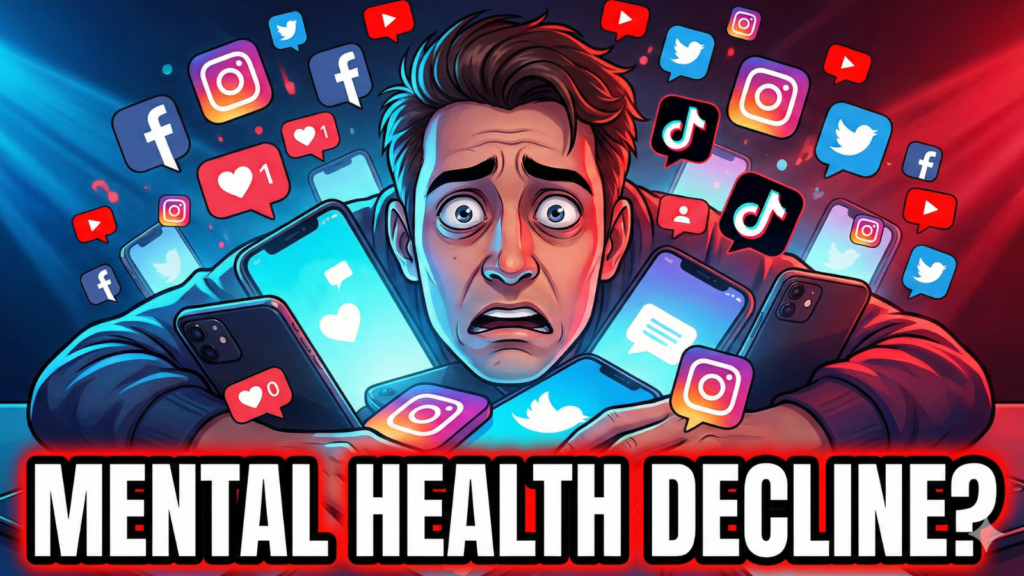

Written by someone who works on screens every day—which I do. And all I’ve discovered about the problem, after realizing there was one, before I managed to stop
Screens are an inevitable part of technology.
Starting with work computers and extending through Smart phones, our bodies have increased our time spent in the posture of sitting, staring, and scrolling as compared with moving.
To begin with, it seems as if nothing is
Excessive Screen Time slowly:
- Your eyes are sore
- You’ve got a stiff neck
- Your body feels as if it’s exhausted even without doing much physical work.
This is not normal aging. “This is too much screen time silently destroying one’s physical health,” she added in a “Here’s how it happens. It happens when we age in a way that’s not procreative.
Why Excessive Screen Time Is a Physical Health Problem
Almost everyone believes that screen time has an effect on the following:
- Eyes
- Mind
- Sleep
However, the reality is, your whole body sees the fall-out.
Screen habits of the modern age give rise
- Long sitting hours
- Poor posture
- Decreased movement
- Muscle Imbalance
With time, such habits lead to chronic physical ailments.
1. Digital Eye Strain: The First Warning Sign
Your eyes are often the first affected.
Common symptoms:
- Dry or Burning Eyes
- Drooping eyelids
- Blurred vision
- Sensitivity to light
Why this happens:
- Less blinking when staring at screens
- Continuous close-focus work
- Blue light exposure
Such a problem is commonly called digital eye strain, and its disregard might cause permanent strain on the eyes.
2. Neck, Shoulder, and Back Pain (Tech Neck)
Look around in public places – most people are:
- Looking down at phones
- Hunched over in front of screens
- Sitting without any support for the back
The result is tech neck.
This is the physical effect:
- Neck stiffness
- Tightness in the shoulders
- Back pain- both upper and lower
- Reduced mobility of the spine
Your head weighs Approx. 5 kg. When it leans forward, the pressure on your neck multiplies.
3. Muscle Weakness and Reduced Physical Strength
Excessive screen time is a function of
- High sitting Hour in a day
- Less movement
- Poor muscle tone or weakness in
Over time:
- Leg muscles weaken.
- Core stability decreases
- Balance and coordination become affected
This produces your body:
- feel tired faster
- Weaken strength
- Become injury-prone
Even young adults are facing sarcopenia, or early muscle wasting.
4. Excessive Screen Time Gives Headaches and Body Fatigue
Headaches related to screens are very common.
They appear because of the following:
- Fatigue in the muscles of the eye
- Poor Posture
- Neck tension
- Screen brightness
These headaches often feel:
- Dull
- Heavy
- Pressure-based
Headaches are accompanied by reports of continued body fatigue, even without physical work.
5. Reduced Level of Physical Activity & Weight Gain
More screen time = less movement.
This leads to:
- Fewer calories burned
- Slower metabolism
- Increased fat accumulation
Long-term use causes:
- Weight gain
- Poor stamina
- Lifestyle diseases
The body was meant to move, not sit for 8–12 hours daily.
6. Poor Sleep Affects Physical Recovery
Excessive screen time doesn’t stop affecting your body at night.
Blue light exposure:
- It delays sleep.
- Reduces the quality of sleep.
- Impacts muscles during recovery
Poor sleep is associated with:
- Poor immunity
- Muscle ache
- Low energy next day
Your body heals itself when you sleep. Screens disrupt that process.
#7. Joint Stiffness and Limited Mobility
One physical consequence of too much time in front of the screens that most people do not even notice is joint stiffness.
When you sit for long hours:
- Hips are flexed
- Knees do little moving
- Ankles remain idle
- Shoulders are tense
Gradually, the joints lose their natural range of motion.
What this leads to:
- Stiff knees when rising
- tight Hips and Lower Back
- Less flexibility
- Increased risk of injury with simpler movements
Thus, many people feel older than they really are, even without engaging in heavy physical labor.
Your body joints need movement to be healthy. screens have reduced the movement significantly.
8: Poor Blood Circulation & Numbness
Too much screen time also causes problems related to blood flow, especially in the lower part of the body.
Seating for prolonged periods of time:
- Increases blood pressure
- Compresses nerves
- Reduces oxygen delivery to muscles
Common signs:
- Numb legs or feet
- Cellulite tissues
- Cold hands or toes
- Feeling of heaviness in the calf muscles
Poor circulation may also contribute to the following conditions:
- Varicose Veins
- Swelling in legs
- Muscle fatigue
Taking simple standing breaks and stretching exercises can work wonders—but only if you do them on a regular basis.
What You Can Do to Protect Your Physical Health ( Excessive Screen Time )
You don’t have to give up screens; you need better habits.
Simple fixes:
- Take a 5-minute movement break every 30–45 minutes
- Follow the 20-20-20 rule for eyes:
- Keep screen at eye level
- Strengthen neck and core muscles
- Reduce screen use before bedtime.
What matters most is not perfection but consistency.
Conclusion
Excessive Screen Time is not damaging physical health Overnight.
It accomplishes this on a daily basis, in silence
Pain, stiffness, fatigue: These are signals, not coincidence.
Take care of your body if you want it to take care of you tomorrow.
it’s Called Digital Burnout
NOTE: This is for educational purposes only. Not medical advice. Consult a doctor for health concerns.