Introduction : How Our Mental Health Decline
We are living in the most interconnected time in human history, but peace of mind has never been more difficult to attain. There are constant notifications buzzing in our pockets, screens lighting up our waking hours, and attention is now recognized as the ultimate form of cryptocurrency. In 2026, discussions surrounding mental health in the digital age are not optional-they are required.
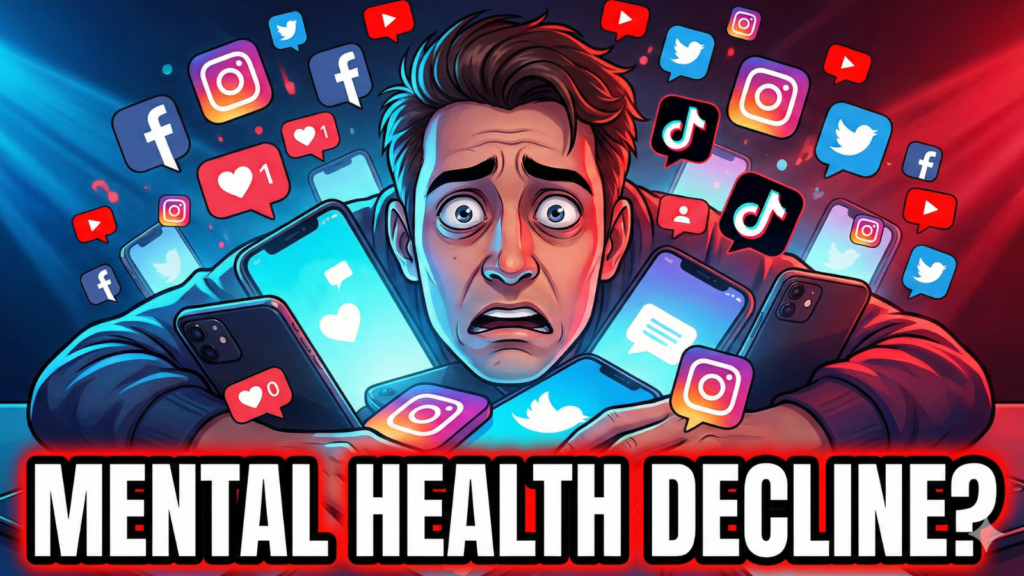
As a culture, we are just realizing that we have been suffering through a Mental Health Decline due to our online habits that we thought were innocuous. This article will explain the breakdown that is taking place in our minds, the reason behind this problem, and the only solution that will actually help.
Why This Topic Matters More Than Ever in 2026
mental health problems have not only included severe cases. Cases of burnout, anxiety, short attention span, Emotional numbness, as well as mental exhaustion, have become quite prevalent.
“The digital world of 2026 is quicker, smarter, and more immersive than ever:”
The development of technology has
- “The machine learning engine never ceases to learn based on our behavior.”
- Work-Life Through Screen Time
- “Social validation is measured in likes, views, and replies”
Technology itself isn’t the problem. It’s the rate and manner in which we, as a species, use it, and the ways in which we’re not even aware that we’re doing so. This is where the problem with our mental
What Does “Mental Health Decline” Really Mean?
Mental health decline doesn’t happen overnight. It’s built up bit by bit through daily habits that feel normal.
- Reduced deep focus capacity
- Persistent background anxiety
- Trouble keeping present
- Emotional detachment
- Sleep disturbances
- dopamine addiction
Less poetically, our brains are overstimulated and under-rested.
In this digital era, the mind hardly ever gets to experience silence. Even on break, we scroll. Even before we go into slumber, we consume content. After some time, this rewires how your brain handles stress, pleasure, and attention.
Main Causes of Mental Health Decline in the Digital Era
1. Constant Screen Exposure and Cognitive Overload
Our brains are made to handle limited inputs. Now we are handling thousands of micro-inputs on a daily basis: messages, videos, ads, headlines.
This results in:
- Psychological exhaustion
- Poorer memory retention
- Decision exhaustion
According to research, by 2026, digital stimulation keeps the brain alert and does not enable recovery of the brain by 2026 because of the continuous stimulation it gets.
2. Social Media Comparison Culture
Social media presents the good stuff, not reality. However, one compares.
This results in:
- Low self-esteem
- Fear of missing out (FOMO)
- Chronic dissatisfaction
This effect also gets felt by those who do understand the intellectual side of it all. Social validation has a deeply ingrained presence in digital activity.
3. Reduced Attention span
“Short-form content is ever dominant in 2026—fifteen-second video clips, quick reels, and instant summaries.” Although it is convenient and effective, it “programs one’s
The result:
- Long content reading issues
- Loss of patience
- Shallow thinking
This, in turn, causes deterioration in mental health through reduced concentration and escalation in frustration levels.
4. Blurred Work-Life Boundaries
Though remote work and technology have enhanced work flexibility, boundaries have been removed.
Messages come through late at night. Emails accumulate in the morning. The mind is always half-connected.
This continuous intellectual stimulation results in:
-
Chronic stress
-
Emotional exhaustion
-
Burning out without warning symptoms
5. Dopamine Overstimulation
Every alert, like, or message triggers a rush of dopamine. However, as time passes, the brain becomes reliant on the steady stimulation in order to feel “normal.”
This generates:
- Restlessness
- Lack of motivation for real-world tasks
- Emotional Flatness when offline
As of 2026, psychologists have been associating the regulation and dysregulation of the dopamine system with anxiety and depressed mood, and not with

Why Common Solutions Often Fail
“Just Reduce Screen Time”
This advice sounds great, but it never happens. Why?
Because:
- Digital technology is related to work
- Social life is happening on the Internet
- It will trigger a certain discomfort, similar to withdrawal
“Simply putting an end to technology use won’t solve the problem.” Without filling the void left by
“Practice Mindfulness for 5 Minutes”
Mindfulness is helpful, but isolated short practices will not offset 10+ hours of screen exposure.
Declines in mental health cannot be addressed by system-level solution-based changes.
“Take a Social Media Break”
“Temporary holidays provide relief, but without modification of consumption habits, old habits return.” The problem is “unconscious usage, not usage.”
What Actually Helps in 2026 (Realistic Solutions)
1. Digital Intention
Instead of avoiding technology, you should manage when and how you use it.
Examples:
- Social media time slots
- No-screen Mornings or Nights
- Notifications are turned off by default.
2. Deep Focus Blocks
The brain must be trained to focus once again.
Simple Steps:
- 60–90 minutes of focused task performance
- No-background-scrolling
- One Task , One Screen
This restores attention span and quieting of the mind.
3. Physical Movement Without Screens
Walking, stretching, or exercising without the need for headphones and screens enables the nervous system to recharge.
It is one of the most underrated methods of reversing the decline of mental health.
4. Real Human Interaction
Technology does not equal emotional connection.
In-person conversations:
- Manage your emotions
- Combat loneliness
- Enhance mood stability
Even small-scale real-life interactions are highly beneficial to mental health.
The Future Perspective: Where We’re Headed
As of late 2026 and beyond, mental well-being will have become an everyday maintenance concern, and not just an incident.
Trends already emerging:
- Digital wellness tracking
- Screen-aware work practices
- Mental Health Awareness
Instead, the future is ‘psychically conscious’ use of technology.
Conclusion: Awareness Is the First Recovery Step
Mental decline in the digital age isn’t a personal failure. It’s the predictable consequence of an always-on, always-connected existence.
The point isn’t to get out of technology—but to refuse to let it unconsciously program your mind.
Small, incremental changes are more important than radical cleanses. Taking care of your psychological space does not demonstrate laziness or lack of strength – it demonstrates intelligence in the year 2026.
“The care of your mind is on par with the care of your body.”
NOTE: This is for educational purposes only. Not medical advice. Consult a doctor for health concerns.