Introduction: From Mechanical Machines to Tech Products
{ Automobile Technology } A car is no longer judged on engine capacity, mileage, or appearance. Long ago, this was the criterion. Nowadays, it seems old-fashioned. In the year 2026, a car is not a mechanical device; it is a computer on wheels.
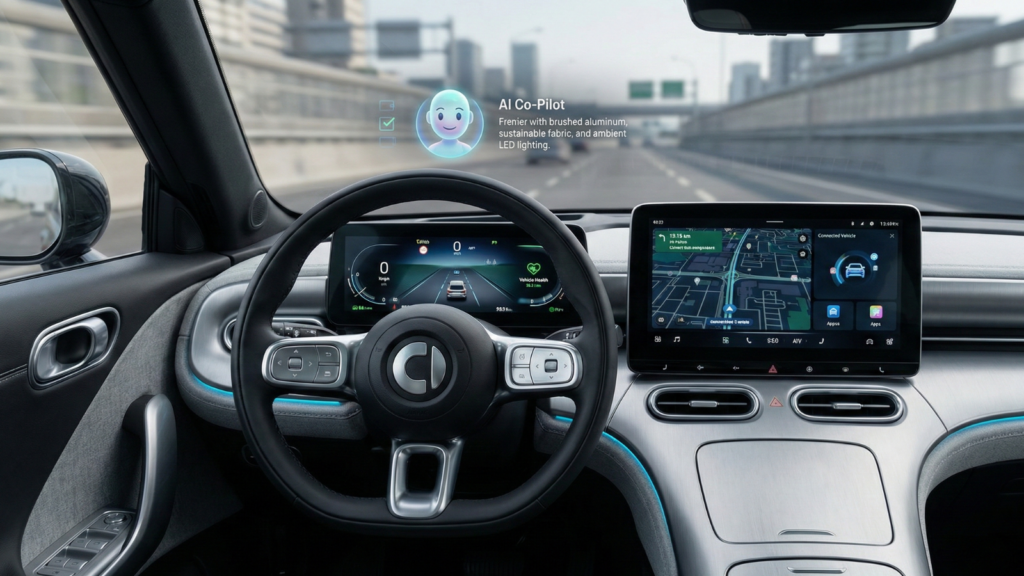
Contemporary cars run on software, sensors, AI, and connectivity. Every element of the vehicle – the steering wheel, the interiors, the safety features, and the driving itself – is impacted by software. Automobile Technology is moving so quickly that this generation’s consumer-buying experience for a car is akin to selecting a smartphone.
As a technology enthusiast and car aficionado, this is really exciting. Cars are now thinking, learning, assisting, and networking. This has significantly increased the safety and intelligence of their drives.
The blog discusses ways in which cars turned out to be tech-enabled products and the innovations that resulted in these cars. The blog will help readers understand what car innovations mean to those who purchase and use cars.
Automotive Technology Explained in Simple Terms
Automotive technology fundamentally means the integration of software, electronics, AI, and connectivity into vehicles to enhance performance, comfort, safety, and intelligence.
Consider today’s car as one large system composed of:
- Several onboard computers (ECUs)
- Sensors and Cameras
- Software and AI models
- Internet connectivity
- Electric and digital control systems
Instead of just mechanical answers, modern cars now include:
- Assess the road conditions
- Predict driver behavior
- Help with steering and braking
- Communicate with applications, satellites, and the cloud.
This explains why updates to car technology seem to get faster each year, just like the pace of software innovation.
Key Automotive Innovations Powering Modern Cars
1. ADAS Systems: The Brain Behind Safer Driving
ADAS, or Advanced Driver Assistance Systems, are one of the reasons why cars are perceived as ‘smart’ today.
Popular ADAS functionalities include:
- Adaptive Cruise Control
- The adaptive
- Lane-keeping assist
- Automatic emergency braking
- Blind-spot monitoring
- Driver fatigue detection
These systems employ the use of cameras, radar, and sensors to constantly detect all that is happening around them. They do not replace the driver at this juncture but instead operate much like a “digital co-driver” – always vigilant.
As of 2026, ADAS becomes no longer a nicety for a car. It will soon be a norm in car safety.
2. Artificial Intelligence Cockpits and Intelligent Dashboards
The old dashboards displayed information about speed and fuel. The modern dashboards display information, intelligence, and interactivity.
The AI cockpit is now equipped with the
- Voice Assistants and the Feature of Hands-Free Operation
- Personalized driver profiles
- Predictive Navigation Recommendations
- Gesture and touch controls
- OTA (Over-the-Air) Software
Your car now knows who is driving it, automatically changes the seats and mirrors accordingly, plans your route according to your regular patterns, and even reminds you when it is time to visit a service station.
This development has transposed the car dashboard into a digital workspace and entertainment center, with smart cars experiencing a personal dimension like never before.
3. Electric Vehicle Integration & Software Control
Electric cars brought about the transition of cars into computers.
EVs depend heavily on the following:
- Battery management software
- Algorithms for energy optimization
- Regenerative braking systems
- Thermal control systems
Conventional cars, as compared to electric cars, are less dependent on software. Software can upgrade range, speed, and fuel efficiency of EVs.
This software-led strategy is also making an impact on petrol and hybrid vehicles, thereby proving the fact that the automotive sector has gone digital-first.
4. Connected Vehicles and Always-Online Cars
Connected vehicles are those that talk outside the road.
They relate to:
- Smartphones and wearables
- Cloud servers
- Traffic management systems
- Smart home ecosystems
- Emergency services
Real-time traffic alerts, remote car control, live diagnostics, and location-based services are now ordinary features.
This connectivity transforms cars into a part of a larger ecosystem of smart mobility rather than separate machines.
5. Autonomous Driving: Still Evolving, Still Revolutionary
Fully self-driving cars are not at the same stage of development, though they are making strides.
Current systems handle:
- Highway Cruising
- Traffic jams
- Automated parking
- Lane Centering
Though completely autonomous cars are not common yet, semi-autonomous cars are revolutionizing how people drive and interact with technology.
Meanwhile, autonomous driving has more to do with eliminating human error, which tops the list of reasons behind accidents, rather than eliminating drivers.
Impact of Automotive Technology on Daily Life
Safer Roads
Using ADAS technologies and predictive analytics means that today’s cars are now:
- React faster than humans
- Avoid Collisions
- Decrease fatigue-related accidents
“Safety has stopped being a reactive function. It’s now a preventive function.”
Improved Driving Experience
Cars nowadays adapt to the driver rather than the driver needing to adapt to the car.
You feel:
- Smoother drives
- Less stress in traffic because there would be
- Seamless Navigation
- Intelligent assistance
The “feeling” of driving feels lighter, more intelligent, and
Lifestyle Integration
cars have become lifestyle products.
They sync with:
- Work calendars
- Music preferences
- Fitness data
- Travel plans
In the case of a number of individuals, the car has become a mobile extension of their online or digital lives.
Signs You Already See Automotive Tech Around You
Whether you mean to or not, you’re already existing in the auto-tech age.
Common signs include:
- Touchscreen infotainment systems
- Wireless Android Auto and Apple CarPlay
- Voice-Controlled Features
- Digital Instrument Cluster
- Car Locking and Tracking through Apps
- Software updates from Manufacturers
These are not “extras” anymore – this is what defines a modern smart car.
Why Traditional Car Thinking Is Outdated
Judging cars by the capacity of their engines or by brand reputation simply shows a lack of vision.
in the year 2026:
- Software matters as much as horsepower
- The importance of updates is no less than servicing.
- User experience is just as important as build quality.
It is the same as buying a mobile just for the body design and completely ignoring the processor and OS when it comes to automotive technology.
Basically, cars have now evolved to tech platforms on wheels, rather than remaining mere transport tools.
Practical Advice for Buyers and Tech Lovers
In buying or upgrading a car, for instance, think like a tech user.
Focus On:
- ADAS safety features
- Software update policy
- Infotainment performance
- App connectivity
- Hardware that is future
Tech enthusiasts should read:
- Auto Tech Trends
- Future mobility innovations
- Smart vehicle technology upgrades
The tech-savvy consumer receives a much better value for their money.
The Road Ahead: Why the Future of Cars Is Exciting
Automobile technology has a bright future.
We are moving toward:
- Smarter AI cars
- Autonomous assistance with no seams
- Green transport
- Software-defined cars
- Fully connected transport systems
Today, cars are on the way to being intelligent companions for humans. For car lovers, this is the most exciting time in the history of cars.
Conclusion: Welcome to the Era of Computers on Wheels
Cars didn’t suddenly become computers but rather transformed into one. The transformation in the automotive industry involved the
By offering ADAS solutions, AI displays, connectivity solutions, and electric integration solutions, the automobile industry has changed the very fabric of mobility. In the year 2026, driving a car is no longer a means to an end; it is a journey to experience innovation.
The future road is smarter, safer, and more connected than ever. And that’s just the start of what’s possible in future mobility.