Introduction: Cars Are No Longer Just Machines ( ADAS Technology )
It can be expected that in the year 2026, a car will no longer be defined in terms of its engine, mileage, and design. It will all be about software, sensors, and intelligence. As soon as people begin the discussion about contemporary cars in the modern era, the talk shifts immediately to ADAS Technology, self-driving cars, smart car displays, and connectivity.
This has led to a question that is often asked by car enthusiasts as well as technology followers:
Are modern cars autonomous or simply highly intelligent personal assistants with wheels?
In response to that question, it is necessary to point out that a distinction must be made between ADAS technology and autonomous driving. These two concepts are difficult to distinguish due to a lack of understanding of both.
As a person who is very enthusiastic about smart cars and car innovations, this particular issue aptly reflects the current state of mobility and its future trends.
An Insight into Modern Car Technology Explained Simply
Before we compare ADAS Technology to autonomous vehicles, it is important to explain a simplified version of how modern automotive technologies function.
Today, the vehicles use:
- Cameras, Radars, and Ultrasonic Sensors
- ECUs: onboard computers
- Software Ai
- Internet connectivity
- Electric & Digital Control Systems
Such components enable a car to:
- Note surroundings
- Analyze Risks
- Help driver decisions
- Connect with external systems
This explains why car tech updates feel like mobile device updates compared to regular mechanical updates.
What Is ADAS Technology?
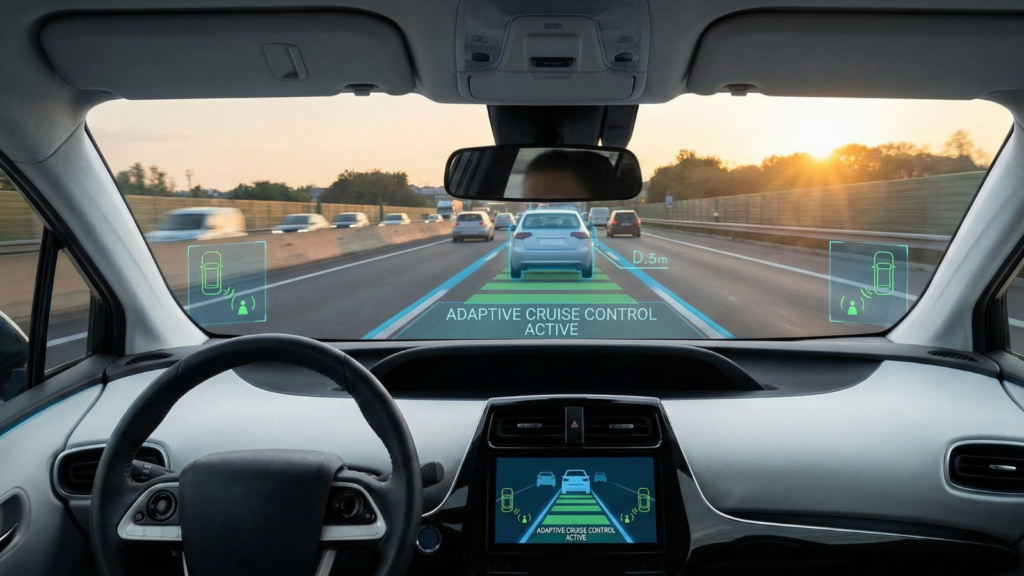
ADAS Technology (Advanced Driver Assistance Systems) is designed to assist drivers, not replace them.
ADAS systems are continuously observing the road and always assist the driver in preventing errors and fatigue.
Common ADAS Components Seen in the Year 2026
- Adaptive cruise control
- Lane Departure Warning
- Lane keep assist
- Automatic Emergency Braking
- Blind spot detection
- Traffic sign recognition
- Driver Attention Monitoring
Such systems are like a digital co-pilot: they are always watching, always alert.
Responsibility is the responsibility of the driver, but reaction time is greatly improved.
What Is Autonomous Driving?
Autonomous features more advanced technology.
Instead of helping, it controls the vehicle – partially or completely, depending on its autonomy.
Levels of Autonomous Driving (Simplified)
- Level 1–2: Assistance systems for drivers
- Level 3: Conditional automation (hands-off in limited conditions)
- Level 4: High automation (driver not required in designated areas)
- Level 5: Autonomous driving capability throughout (still experimental)
As of 2026, most consumer cars will be Level 2 or perhaps a preliminary version of Level 3.
Thus, while self-driving cars do exist, they are yet not full-fledged and strictly controlled.
ADAS vs Autonomous Driving: The Real Difference
| Feature | ADAS Technology | Autonomous Driving |
|---|---|---|
| Driver control | Always required | Sometimes optional |
| Responsibility | Driver | Vehicle (limited cases) |
| Availability | Widely available | Limited deployment |
| Risk handling | Assists reactions | Makes decisions |
| Legal approval | Global acceptance | Region-specific |
ADAS improves driving. Autonomous driving Target to replace it — but we’re not Final there yet.
Key Innovations Powering Smart Cars in 2026
1. ADAS Technology : The Safety Backbone
ADAS technology has become an integral part of smart cars.
Now manufacturers treat ADAS as:
- Safety Standard
- Regulatory requirement
- Selling point
With cars actively scanning surroundings, predicting danger, and quicker intervention than ever before by humans, this has already reduced accident rates across the world.
2. AI Cockpits and Smart Dashboards
The dashboard is no longer just an information panel.
With AI-powered cockpits now available, there is:
- Voice controls
- Predictive navigation
- Custom driver profiles
- Real-time driving insights
- Over-the-air feature upgrades
The car comes to understand the driver’s habits and drives accordingly for an even smoother, intuitive experience.
3. EV Integration and Software Control
Electric cars drove the industry towards software-defined cars.
EVs depend greatly on:
- Battery Management Systems
- Algorithms for energy optimization
- Software for regenerative braking
Today, improvements come through updates rather than through modifications. This attitude is being adopted for all kinds of vehicles.
Impact on Safety, Driving Experience, and Lifestyle
Safer Roads Through Assistance
The use of ADAS reduces
- Human Error
- Reaction times that are longer than
- Driver Fatigue
This leads to less collision and safer roads.
A Smarter Driving Experience
Driving in 2026 will feel like
- Less stressful
- More predictable
- More comfortable
Cars help instead of needing endless attention or assistance, mostly when driving long distances and in cases where congestion is experienced.
Lifestyle Integration
Contemporary vehicles pair with:
- Smartphones
- Work Schedules
- Music preferences
- Navigation behavior
Your car is now a part of your digital world.
Risks of Ignoring Auto-Tech Trends
The consequences of ignoring automobile innovation include:
- Poor Safety Performance
- Increased depreciation
- Limited upgrade options
- Obsolete driving skills
With growing regulatory pressures and demands, technologically less-adept cars will soon become outdated
The Future: ADAS Today, Autonomy Tomorrow
However, since this is ADAS technology, it will serve as the bridge to autonomous driving.
Every lane assist feature, every refinement of braking algorithm, every sensor upgrade moves us closer to safer autonomy.
But even though full self-driving is still not mainstream, the journey itself is reshaping mobility.
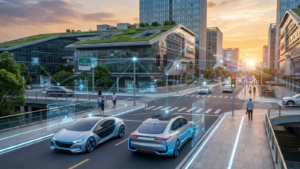
Conclusion: Just How Clever Will Cars Be by 2026?
Newer cars are incredibly smart-but not fully autonomous.
ADAS technology has transformed driving today with increased safety, comfort, and confidence. It is steadily progressing to autonomous driving, but responsibility remains with humans.
The excitement will be in the transition. We’re witnessing the most important evolution in automotive history — one where cars become intelligent partners, not just machines.
The future of mobility is smart, it’s connected, and it’s closer than ever.