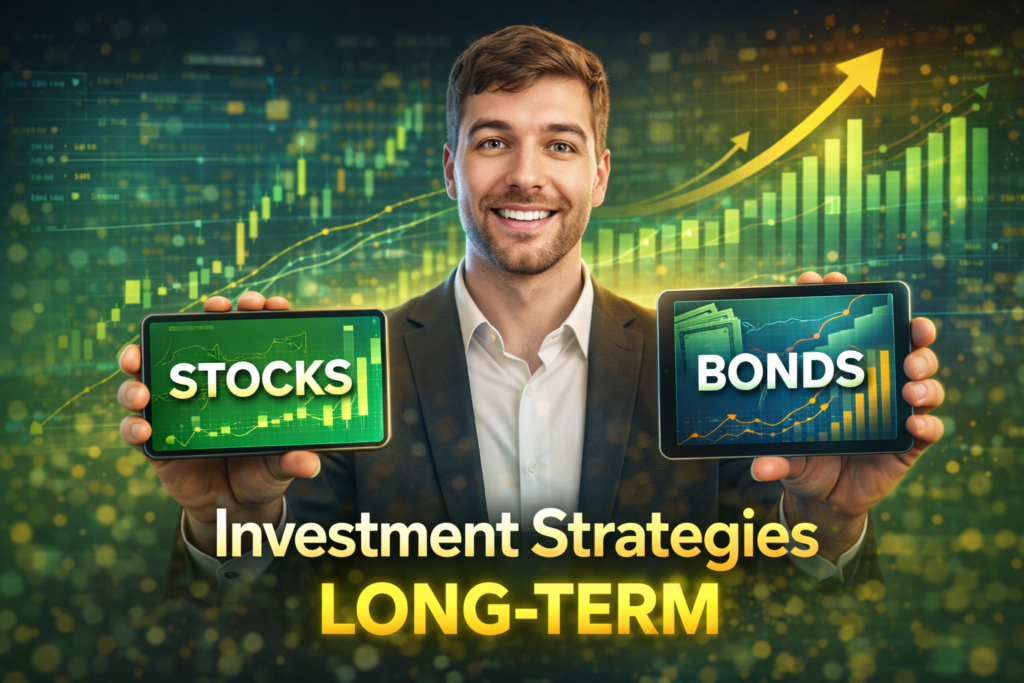
Top 10 Investment Strategies for Long-Term Wealth
By Naman | Investment Strategies | January 23, 2026
There is an adage: “The best time to plant a tree was 20 years ago. The second best time is now.”
Investing in mutual funds is not for getting rich quickly. It is for getting rich slowly. It is for assuring funds gathered from your 9-to-5 life aren’t undermined by inflation in the States, or your reckless spending habits.
So, start your SIP now, and believe me, your future self, who aspires to retire or travel the globe, will do so with gratitude.
The noise is louder than ever in 2026. We have AI agents predicting stock prices, 24/7 crypto markets, and social influencers pitching the “next big thing.” It is easy to get distracted. But the fundamentals of how you build lasting wealth haven’t changed; they’ve just upgraded.
If you want to look at your portfolio in ten years and see financial freedom instead of just “savings,” here are the top 10 investment strategies I use to manage my own future.
1. The “Core and Satellite” Approach
This is what my portfolio is based on. I don’t risk my retirement funds.
The Core (80%): This money goes into low-cost, broad-market Index Funds or ETFs (such as the S&P 500 or a “Total World Stock ETF”). I barely touch this. This type of investment represents the general growth of the global economy.
The Satellite (20%): This category is basically reserved for my active bets. At the moment, I choose stocks or a sector ETF such as AI or crypto.
Why it Works: Even if my active picks fail, I am safe because of my core. Even if my active picks are less than good to start with and end up being “moon stocks,” I will earn a good bonus on my investments. It scratches my itch to trade without jeopardizing my future.
2. Dollar-Cost Averaging (DCA) on Autopilot
I once tried to “time the bottom.” Meaning: sitting on cash, waiting for the market to crash in order to buy stocks at bargain prices. Guess what happened to me that way: the market continued to go up while I continued to be out of the game. Today, what changed for me is that every Friday morning, every month, every quarter. a lump-sum amount of money leaves my bank account and directly purchases my “core” funds with no further need to research stocks!
The Logic: When my stocks are down as a result of a down market, my fixed investment allows me to purchase more. When markets are up and stocks cost more, I am only able to purchase fewer shares. This mathematically works to reduce my price per share. It negates the decision of whether it’s a good day to buy stocks.
3. Dividend Growth Investing (The Snowball)
“I enjoy getting the cash in my accounts without having to sell a share.” The author focuses on stocks known as “Dividend Aristocrats,” companies that have a history of continuously raising their dividend payout for 25+ years.When in the year 2026 inflation is running at 2.5% to 3% in our economy, dividends can serve as an inflation hedge.
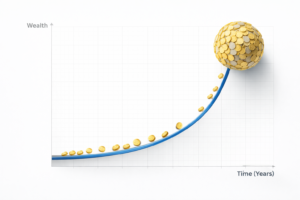
My Rule: Always reinvest the dividends received (DRIP). This sets off the phenomenon called the compounding snowball effect wherein the collected dividends are used to buy more shares that yield more.
4. The “Barbell” Bond Strategy
Bonds are far from dead. Bonds represent a vital income source in a high interest rate environment where interest rates are anchored around 3.5-4% in 2026. These are bonds that I utilize via a “barbell” strategy:
Short-Term:
I invest in 1-year Treasury Bills because I want high yields with zero risk.
Long-Term: I have bonds with 20+ year maturity dates to protect my investments in the case of a recession, where interest rates fall and the price of long bonds skyrockets
Middle: I skip the intermediate bonds of 5 to 10 years. I’m looking to have complete safety or maximum reward from long durations.
5. Real Estate Without the Landlord Headache
I work full-time and do not own the time to attend to toilet fixes at 2:00 AM. I opt not to buy physical properties but rather invest in REITs (Real Estate Investment Trust) and Crowdfunded Real Estate Platforms.
The Shift: In 2026, I also have something called “Tokenized Real Estate,” where I can own a percentage of a commercial building in New York through the use of blockchains. It allows me the benefits of real estate and the liquidity of a stock.
6. Strategic Asset Rebalancing
This strategy is the most difficult to comply with emotionally; however, it is the most lucrative one. Once a year, I look at my portfolio.
If my technological shares have gained 50% and are overrepresented in my portfolio, I will sell some of them.
I take that profit and I go out and I buy that asset class that’s under duress—small caps or international stocks or whatever it might be. “Buy low and sell high” is a trite expression, but actually accomplishing that with an asset allocation strategy is highly effective. People tend to do just the opposite of that—they tend to buy up whatever’s hot and sell whatever’s crashing.
7. Tax-Loss Harvesting
It’s not just what you earn; it’s what you retain too. As a trader, I have to pay capital gains tax, and so I need to find losing positions in my portfolio at the end of the year.
The Move: I sell the loser to realize the loss, therefore lowering my taxes, and then buy the same but not necessarily similar investment to remain invested in the same sector. In 2026, the “Robo-Advisors” do this for you.
8. The “5% Moonshot” Allocation
This phenomenon, called FOMO – Fear Of Missing Out, is a wealth-destroying concept. To safeguard myself from getting into impulsive decisions regarding my life savings, I only allow myself to indulge in high-risk, asymmetric bets to the tune of a strict 5% only.
What is included: Crypto altcoins, angel investing in startups, or high volatility commodities.
The Mindset: If this 5% capital has zero invested in it tomorrow, life would continue on just the same. If this capital were 10x larger, then it would really add to the wealth I already have. “Scratching the itch” preserves the other 95%.
9. Maxing Out Tax-Advantaged Accounts first
Before I buy a single stock in my brokerage account, I make sure my tax-sheltered buckets are full.
401(k) / Employer Match: Free money. 100% return instantly.
Roth IRA: The most powerful force in finance is tax-free growth.
HSA – Health Savings Account: This is in 2026, the ultimate triple-tax-advantage vehicle-tax-free in, tax-free growth, and tax-free out for medical. I pay current medical bills out of pocket, allowing the HSA to grow as a retirement account.
10. Investing in Human Capital (You)
The wisest investment is to boost your income levels. I invest 5-10% in enhancing my income through courses like investing, AI prompts, and leadership courses.
The Math: Let’s calculate this: I can earn an extra $20,000 a year from a career improvement of my skill sets. What this means is that I can pour an extra $20,000 per year into an investment in every single year of my life – and no investment will ever beat that!

Conclusion: Time is the Secret Ingredient
There’s no magic algorithm. The difference between a rich person and a broke person isn’t based on intelligence; it’s based on patience.
These 10 investment strategies are boring. They will never make you a fortune by next Tuesday. But regardless of whether news outlets are shouting “Recession” or “Bull Market,” your life will be significantly freer in 2036 if you execute them consistently than it would be by day-trading just.
Begin today. Automate the process. And let time do the heavy lifting.
NOTE: This content is for educational purposes only. No financial advice or guarantees.