Future Online Education Trends & Skills 2026
The world of education in the year 2026: Online Education is no longer a ‘option’—it is the default education modality for students, professionals, and career changers. The degree is still important; skills, flexibility, and speed of learning become even more important than that.
As someone who works a regular nine-to-five, trades part-time, and maintains good discipline in personal finances, I’ve witnessed firsthand how online education is no longer “nice to have,” but rather essential in career development. The experts of tomorrow will be neither those with the best credentials nor those with merely good credentials—but rather those who never stop learning.
Within this blog, we’ll examine the future of online education, top trends that will define this future, along with abilities that will actually pay off soon after 2026.
Why Online Education Is Evolving Faster Than Ever
The most dramatic change in online learning is intent.
Earlier, individuals would learn online to acquire knowledge.
Today, learning online helps individuals upgrade and stay employable, competitive, and financially stable.
There are three main forces that are propelling this shift:
- Rapid technology upgrades
- Reduced skill life cycles
- Outcome-oriented recruitment
A trading mentality would find all of this very familiar. “Markets punish slow responders and reward the agile,” as finance experts Joel Greenblatt and Robert Kahn explain in their cover story for *Bloomberg Businessweek*, “and [education is] doing the same thing in schools
Key Future Online Education Trends in 2026
In the following, let’s take a deeper look into the trends that have already started taking shape in online education—and will set the face of the next few years.
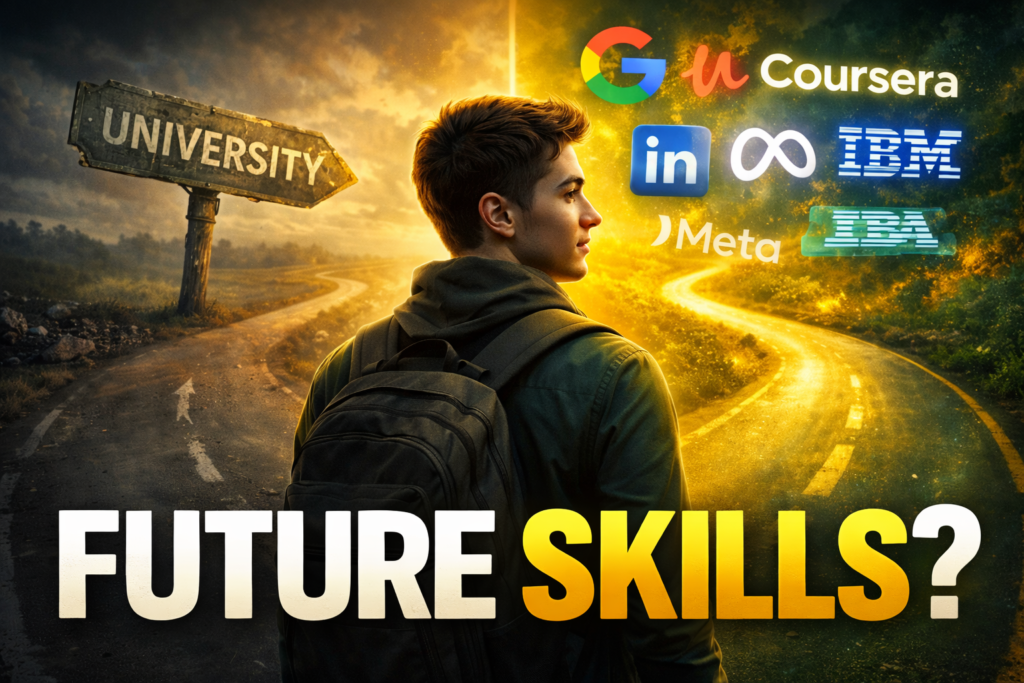
1. Skill-Based Learning Over Degree-Based Learning
Employers in 2026 care more about:
- What you can build
- What you can solve
- What you can perform
Online learning platforms today are designed to build on a job role and the associated skills for the same, rather than on academic theory.
Examples:
- Data Analyst Skill Paths
- Product manager certifications
- Financial modeling bootcamp
I’ve seen certifications, at times, outperform degrees when it comes to interviews and performance in the real world.
2. Artificial Intelligence-Based Personalized
E-learning is becoming adaptive in nature.
AI presently:
- Alerts for learning gaps
- Suggests personalized modules
- Pace adjusted based on performance
It’s like risk management in stock trading; your tactics change depending on the market. Learning seeks to finally put that into action.
Impact: Rapid improvement, less time wasted, better retention.
3. Microlearning & Modular Education
Long generic courses are losing relevance.
Online Education in 2026 favors:
- Short lessons
- Skill-related modules
- Learn-now-apply-now formats
This matters for working professionals like myself. Learning in 30–45 minute blocks fits into real life rather than marathon sessions.
4. Project-based & Real-World Learning
A certificate is not enough any longer.
Online education now focuses on:
- Projects live to-date
- Case studies
- Creation of portfolio
This is where learning is translated into career leverage. In the same way that paper trading occurs before actual capital deployment, projects ready you for real work.

Most In-Demand Skills for Online Education in 2026
Let’s discuss skills, not hype, but market-relevant skills.
1. Technology & AI Skills
These remain the strongest long-term bets.
High-demand skills:
- Data analytics
- Artificial intelligence and machine learning basics
- Cloud Computing
- Cybersecurity
Financially speaking, these skills provide high ROI and job certainty.
2. Financial Literacy and Investment Skills
Financial skills are no longer elective courses.
The online learning sector is experiencing immense growth in the following:
- Personal finance
- Investment Analysis
- Risk management
- Financial modeling
As a trader, financial literacy must be made an integral, not an optional, part of living, in my opinion.
3. Business and Strategic Thinking
Automation is on the rise—but the thinking involved in strategy cannot really be automated.
Vital skills are:
- Product management
- Business analytics
- Decision-making frameworks
All of these skills are at the crossroads of technology and business, which makes them supremely useful.
4. Digital Marketing and Growth Skills
Every business requires development.
The online education system in 2026 emphasizes:
- Performance Marketing
- SEO & analytics
- Conversion optimization
This skill has a direct correlation with revenue generation and this explains why it’s still lucrative.
5. Soft Skills With Measurable Impact
Soft Skills Are Becoming More Structured and Measurable.
Online education now incorporates:
- Communication frameworks
- Leadership under pressure
- Emotional Intelligence
When it comes to trading or any business, control over one’s emotions could be much more valuable than IQ. The same holds for any leadership position.
How Online Education Is Changing Career Planning
Career planning in 2026 is very different.
Instead of:
“Study → graduate → job”
We now :
“Learn → apply → earn → upgrade”
Online education can support career optimization on a constant basis, just like the rebalancing of a portfolio on which money is
Smart professionals:
- Learn one new skill every 6–12 months
- Stack certificates
- Make adjustments according to market demands
How to Prepare for the Future of Online Education
I have found the following basic approach helpful:
1. Approach Learning as an Asset
Ask,
Will this skill increase income, stability, or opportunities?
2. Free + Paid Education Combination
It is free for exploration. It is paid for execution as well as certification
3. Apply Immediately
Knowledge that is not applied will depreciate quickly.
4. Skill ROI Tracking
Just like financial investments, monitor results.
Conclusion: Learn Like a Professional, Adapt Like an Investor
“The future of online education is not about platforms; it is about mindset.”
Successful learners in 2026 will:
- Remain curious
- Learn continually
- Adapt quickly
- Use consistently
Just like in disciplined trading or investing, education also benefits those people who remain patiently committed to it, no matter what the circumstances are.
Online learning is no longer optional.
“It’s-your-career insurance policy.” Learn intelligently. Improve your skills thoughtfully. Allow your knowledge to compound.