🧠 Inside the Mind of a Cricket Captain: Leadership Lessons from the Middle
Introduction
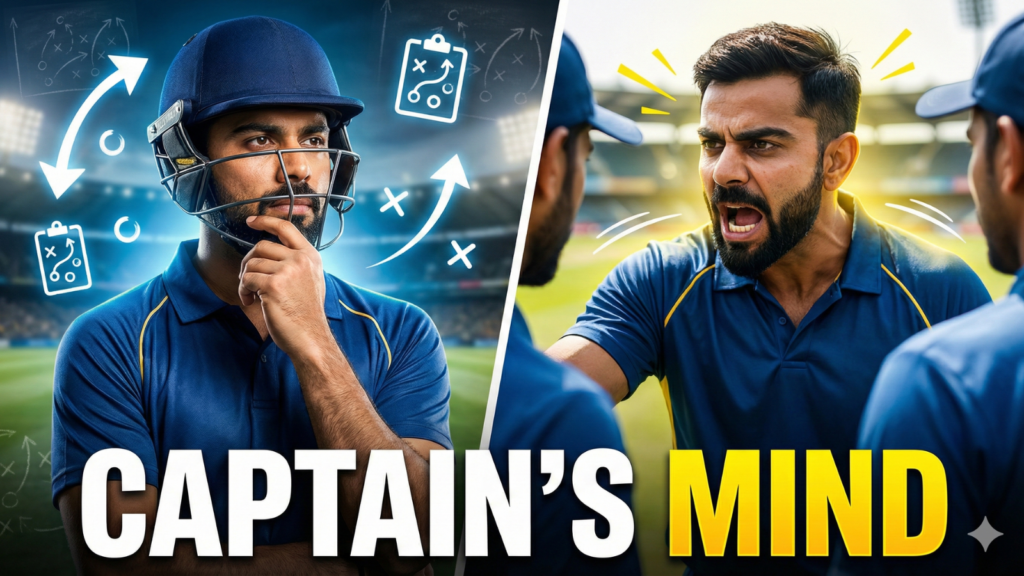
And if you’ve watched sufficient cricket, and I mean sufficient, you know that a game of cricket is won not by skill, not by strength, not by aggression, but in the mind of the Cricket captain of that particular side.
“Stand in mid-off with hands on hips, trying to read the pitch, feel the momentum, deal with egos, and suppress the fear of failure – it is not an easy mental game to truly grasp.”
“From MS Dhoni’s cold-blooded calm during a World Cup final to Virat Kohli’s aggressive chest-thumping style of captaincy, Indian cricket has exemplified every possible form of captaincy. It has become even more pertinent now when cricket has become quicker and louder than it has ever been before,” he said.
Because a poor bowling change, a delayed review, the wrong field can turn a match on its head – and in some instances, a career.
This is not theory. This is cricket reality. Let’s get into the thinking of a cricket captain.
🏏 Why the Role of a Cricket Captain Is Brutal (And Beautiful)
A cricket captain does not only throw the coin. He takes:
- The presence of millions of fans
- The mood of the 10 teammates
- The match situation ball by ball
- Media stories preceding and following the game
Unlike any other game, cricket gives the team captain too much time to think, which is very risky.
With each over, there are questions:
- Attack or Defense?
- Trust the senior or back the youngster?
- Play It Safe or Gamble?
This mental burden is what distinguishes leaders from passengers.
🧩 The Core Responsibilities Inside a Cricket Captain’s Mind
🧠 1. Reading Match Momentum (The Invisible Skill )
Momentum isn’t on the scorecard; it’s felt.
Great captains understand:
- When the batter is merely surviving, there is little pressure on
- When a bowler is one away from magic
- When the opponent’s mental faculties are deteriorating
MS Dhoni was a perfectionist at this too. At times, he held back on bowling changes because he could sense the pressure mounting rather than going by numbers.
That is elite level of captaining.
🎯 2. Bowling Changes: Where Matches Are Actually Won
Fans point accusingly at the bowlers. Experts lay the
However, it is the bowling changes that establish the captains.
A smart captain of the cricket team would say:
- Who Can Dissolve Partnerships?
- Who delivers pressure overs?
- Which team is bowling when the crowd is noisy and unfriendly?
Think of:
- Rohit Sharma using part-time bowlers to disrupt batting rhythm Rohit ensured that
- Dhoni trusting Joginder Sharma in 2007
- Pat Cummins – Attacking rather than Defending
These are leadership calls, not luck.
🧠 3. Managing Player Psychology (Not Just Skills)
A cricket captain deals with humans, not with machines.
Some players require:
- Aggression ( Virat Kohli style )
- Silence and trust ( Dhoni method)
- Protection from Media
- Public Backing After Loose
Great captains understand:
- When to Shout
- When to keep silent
- When to Take Blame
This explains why not all great players make great captains.

🔥 Aggression vs Calm: Two Successful Captaincy Models
🟥 The Aggressive Leader (Virat Kohli Style )
- High Energy
- In-your-face attitude
- Challenges players to exceed the boundaries of their comfort zone
- Dominates mentally
Perfect For:
- Fast bowlers
- Young teams
- Overseas Test Cricket
Risk: Can burn out players if not balanced.
🟦 The Calm Leader (MS Dhoni Style )
- Absorbs Pressure
- Supports players silently
- Takes late but decisive action
- Hides emotions
Best suited for:
- Knockout matches
- Inexperienced Teams
- T20s where the focus is on
Risk: May be perceived as passive, especially when results aren’t seen.
🧮 Data vs Instinct: The Modern Cricket Captain’s Dilemma
The present cricket captain is bombarded with:
- Match-ups
- Wagon Wheels
- The strike rate phases
- Insights created by Ai
“But here’s the truth every fan learns:”
📌 Data informs. Instinct decides.
The best captains combine both:
- Rohit Sharma relies on data
- Dhoni didn’t believe in laptops
contrary to what his gut was Numbers don’t feel the pressure. The captains do.
🧠 Leadership Lesson #1: Take Responsibility, Not Credit
Keep an eye on post-match presentations.
Strong cricket captains:
- Be accountable for losses
- Shift credit for team success to players
- Safeguard dressing room oneness.
Weaker captains:
- Blame pointing
- Blame conditions
- Throw them under the bus
Leading is more difficult during defeat rather than during victory.
🧠 Leadership Lesson #2: Trust Wins Matches Before Skill Does
Players perform when they feel safe.
- Dhoni supporting Rohit as an opening batsman
- Rohit supports SKY after failures
- Kohli backing fast bowlers in international cricket
Trust converts potential into performance.
Cricket captains may believe something different than what they have been taught.
🧠 Leadership Lesson #3: Silence Is Also a Strategy
Not every situation requires drama.
Sometimes:
- Peaceful surroundings have a message
- Any reaction is unsettling to the batter
- Silence builds pressure
Great captains know when not to react.
🌍 Why This Topic Matters in Today’s Cricket
With:
- Shorter formats
- Franchise pressure
- Abuse of social media
- The captaincy is changing so quickly
Leading has never been tougher.
The modern cricket captain is:
- A tactician
- a psychologist
- A media manager
- A pressure absorber
This also helps fans assess their captains objectively and not emotionally.
🧠 EXPERT INSIGHTS: What Fans Often Miss
- A captain sees angles fans don’t
- Field placements are mental traps.
- More than speed, bowlers’ confidence matters.
- One tactical timeout can shift momentum
- Captaincy is learned through scars, not success.
If leadership were easy, every star would captain. They don’t.