Introduction: Why the AI vs Human Creativity Debate Matters Today
AI is no longer confined to spreadsheets, calculations, or automation. They are now doing poems, music composition, logo design, video editing, and even storywriting. This has sparked a concern that has resurfaced with a vengeance across the creative and corporate spaces and schooling. That is the issue of
Can AI think outside its data or is human creativity unparalleled?
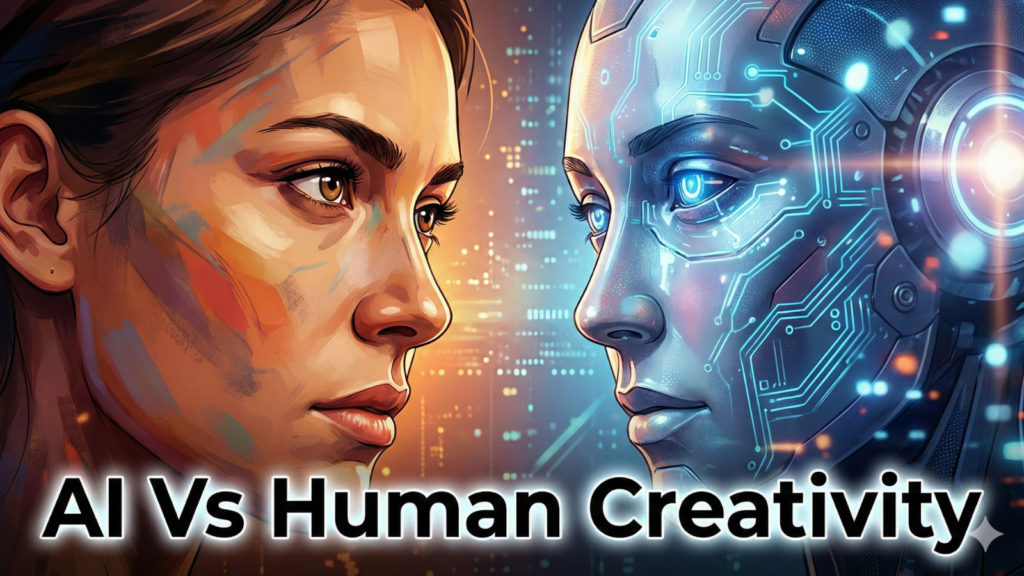
The discussion surrounding AI vs Human Creativity isn’t about being fearful and being replaced—it’s about comprehending creativity, how AI produces an output, and how a human adds meaning and creativity to an idea. As we enter further into the AI world of 2026 and beyond, these questions will dictate our future of work and self-expression.
This piece investigates the phenomenon of creativity, both in machine intelligence as well as in human imagination, in a realistic way without hyperbole, alarm, or unrealistic hopes
Understanding Creativity: AI vs Human Creativity
Before contrasting machine creativity with human creativity, we must have some definition of creativity.
Human Creativity: Beyond the Patterns
By Jay
Creativeness is a product of human experience and is rooted in experience, emotions, curiosity, error, and culture. It encompasses the following dimensions
- Emotional Intelligence
- Intuition and gut feelings are particularly troublesome
- Personal memory and imagination
- Moral judgment and Intent
- Narratives Purposes
A painter doesn’t just make a painting, they express feelings. A writer doesn’t just use words, they express a message from life.
Artificial Intelligence: Creativity through Data
Artificial intelligence, particularly those that are based on machine learning, are decidedly different when it comes to how they function
- It processes large datasets
- Recognizes Patterns and Probabilities
- Predicts the next best output
- Mimics existing styles and structures
AI does not have a feeling of inspiration. It is simply processing information based on its learning of human-created data that already exists.
This difference is what underlies all discussions on human creativity versus AI.
How AI Creates: The Role of Data and Machine Learning
Artificial Intelligence Creativity is fueled by three key elements:
1. Data – The Foundation
Machine Learning algorithms are taught on massive sets of human-developed content, including text, images, audio, video, and software. Without data, there is no learning opportunity for AI.
2. Pattern Recognition
By employing machine learning techniques, patterns are detected in:
- Language structure
- Artistic Styles
- Musical Compositions
- Visual aesthetics
It simply combines the patterns.
3. Probability-based Output
This means that the content produced by the AI system is based on what the system predicts is probably going to come next. This explains the feeling of being awed by some of the artwork produced by the AI system, yet somehow shallow or unoriginal.
In summary, AI produces by mixing and matching knowledge, and not generating intent.
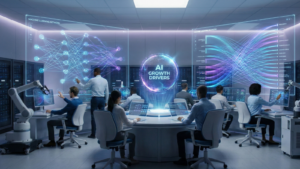
Can AI Truly Think Beyond Data?
“It is not always possible to give a complete definition of
What AI Is Good At
It is exceling:
- Speed and scale
- STYLE Imitation
- Idea variation
- Creative help
- Rapid prototyping
Marketers, designers, and content writers are already using Artificial Intelligence effectively in their line of work as a tool boosting their productivity.
Where AI Falls Short
AI cannot:
- Recognize emotional impact
- Feel curiosity or wonder
- Assign Personal Meaning
- Break the rules deliberately
- Generate from lived experiences
AI doesn’t think beyond the data; it thinks within the boundaries of the data.
This is the major constraint commonly overlooked in the AI vs human intelligence discussion.
Human Creativity vs AI: A Practical Comparison
Here is a grounded comparison that serves to illustrate expectations:
Original Thought
- Humans: Create new ideas from experience
- Discussion: AI-Combines existing ideas
Emotional Depth
- Humans: Feel and show emotions
- Assign a knowledgeable person to manage the team by
Context Awareness
- Humans: Understand social, cultural, ethical nuance
- AI: Follows patterns which it learns from its environment.
Purpose
- Humans: With Intention and purpose, create
- AI: Generates output based on instruction
The comparison signifies why AI is an amplifier of creativity, not a creative replacement.
The Automation Impact on Creative Work
Automation has also impacted the processes of creativity in the contemporary world.
What’s Being Automated
- The process of writing
- Image Enhancement
- Video editing processes
- Music mastering
- Variance components
What Remains Human-Centric
- Creative direction
- Storytelling
- Brand voice
- Cultural Relevance
- Ethical decisions
“The future of work will not be a question of humans vs. AI, but of humans and AI.”
Conclusion: Creativity Beyond Data
“AI vs. Human Creativity” is not a question of competition—it’s about roles.
AI is powerful, fast, and efficient. Humans are emotional, imaginative, and driven. While machines brew ideas from data, humans forge meaning from their experiences.
In the future world of work and innovation, the greatest creativity would belong to human intelligence amplified by artificial intelligence, rather than being substituted by it.
They can process information—but it is up to mankind to decide why it is important.