Introduction: Smart Cars Are No Longer the Future — They Are the Present
“Smart Car Technology” was a future-sounding term a few years back. In 2026, “Smart Car Technology” is a reality. Cars are no longer a mode of transport but are intelligent and software-driven solutions designed to think, assist, and connect.
Smart Car Technology are filled with artificial intelligence, sensors, and sophisticated software systems. Right from predicting potential danger on the road to understanding driving habits, smart car technology has redrawn the entire meaning of driving.
As a technology buff and car aficionado, this is the most thrilling period in the history of the automotive industry. Cars are developing at a speed never witnessed before—not due to the power of the engine, but due to the power of intellect.
So, let’s get inside a smart car and see the magic inside.
What Is Smart Car Technology? (Simple Explanation)
Smart car technology is used to describe the integration of AI and sensor technology with connectivity and software to enable cars to:
- Understand their surroundings
- Help drivers in real-time situations
- Make informed choices
- Remain connected with the digital world
Rather than simply acting on the stimuli, intelligent cars analyze the data and then take actions accordingly.
At the most elementary level, smart cars use:
- Cameras and sensors (eyes and ears)
- AI Software (Brain)
- Connectivity (Communication)
- Digital control systems (nervous system)
All these parts combine to make cars smart rather than just cars.
The Core Technologies Inside a Smart Car Technology
1. Sensors: The Ways Cars “See” the World
Sensors form the basis of smart car systems.
Today, vehicles rely on a variety of sensors such as the following:
- Cameras designed for the detection of lanes and the recognition of objects
- Radar for Distance and Speed Measurement_
- Ultrasonic Sensors for Parking Assistance
- Infrared sensors for night observation & low-visibility detection
They are always scanning their surroundings to create a digital map of the space that surrounds the car.
This makes possible such features as:
- Automatically Braking
- Blind spot alert systems
- Parking assistance
- Pedestrian detection
Smart cars would not even be possible without sensors.
2. AI Systems: The Brain Behind Smart Decisions
Artificial Intelligence
Artificial Intelligence is what links data from sensors to actions.
AI Systems in Today’s Cars: Literature Review
- Decode sensor data
- Forecasting possible dangers
- Analyzing driver behavior
- Enhance Decision Making Capabilities
For example:
- AI identifies a pedestrian crossing the road
- Calculates speed and distance
- Engages braking system faster than human reaction
The technology of artificial intelligence also enables the monitoring of the driver, and the level of attention given must be within safe limits, particularly during long journeys.
By 2026, AI in automobiles becomes no longer optional but mandatory.
3. ADAS Systems: Intelligence That Assists, Not Replaces
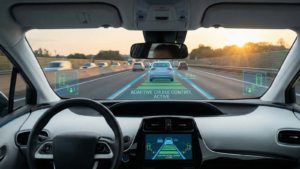
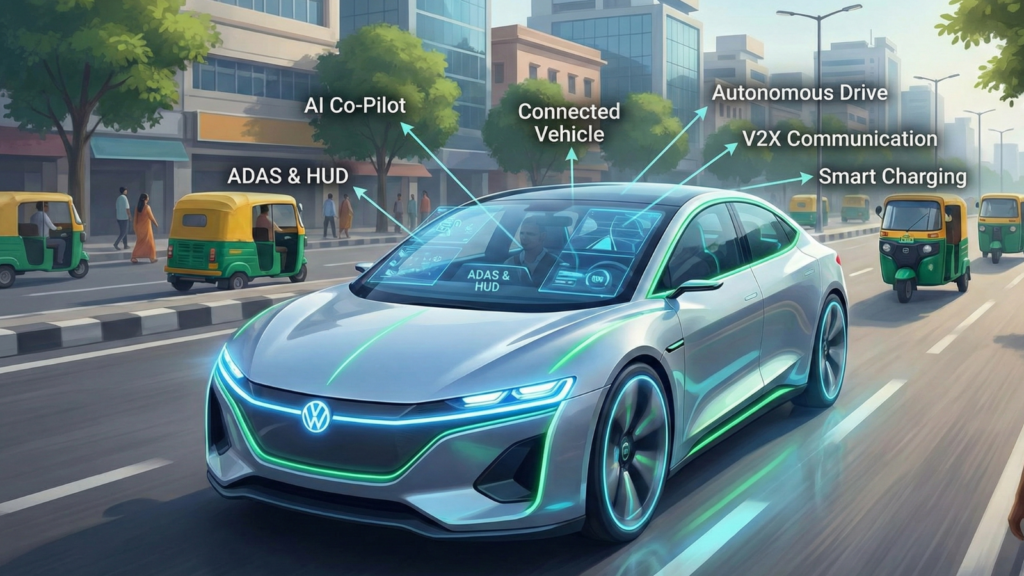
ADAS systems (Advanced Driver Assistance Systems) represent the most noticeable outcome of Smart car technology.
Common components in ADAS:
- Adaptive cruise control
- Lane keep assist
- Automatic emergency brakes
- Traffic sign recognition
- Driver fatigue warnings
ADAS systems will never drive a car on their own. These systems will forever provide a safety net to correct mistakes and give confidence.
Such solutions are currently common in most cars, which goes to show how fast car technology is turning mainstream.
4. Smart Dashboards and AI Cockpits
The dashboard for a car has turned into a digital control center.
Contemporary AI cockpits provide:
- Voice-controlled operations
- Touch And Gesture Interaction
- Computer input devices
- Personalized driver profiles
- Predictive navigation
Over-the-Air Software Updates
“The car remembers your seat settings, the temperatures you like best, your favorite routes, and your favorite music.”
The effect? An experience that feels natural and personal. Not mechanical.
5. Connected Vehicles: Cars That Talk to the World
All connected cars are online.
They communicate with:
- Smartphones and Wearables:
- Cloud servers
- Navigation Systems
- Transportation infrastructures
- Emergency services
This provides connectivity that makes possible
- Real-time traffic information
- Vehicle control by a computer,
- Live diagnostics
- Predictive Maintenance Alerts
To a large extent, your car has now become an integral part of your digital life, like your mobile or computer.
6. Software-Defined Vehicles: Updates Over Repairs
Among the largest changes occurring in smart cars is the emergence of software-defined vehicles.
It could, rather than depending on upgrades involving hardware, focus on
- Improving performance by updates
- Features change after purchase
- Defects are repaired automatically
Evs advanced this process, but currently, petrol as well as hybrid cars are following the same model.
This will mean that your vehicle will actually improve with age.
Major Upcoming Updates on Self-Driving Cars
Still, the technology in smart cars is developing at a rapid pace.
Future projects include:
- More Advanced AI-driven Decision Systems
- Enhanced semi-autonomy systems
- Improved Energy Optimization for EVs
- Vehicle-to-Vehicle
- Smart city integration
These upgrades are going to make the divide between automobiles and computers even more subtle.
Impact of Smart Car Technology on Safety
Safety is where smart cars are at their best.
With AI and ADAS systems:
- Reaction times are faster
- Accidents are prevented before they happen
- Driver fatigue is being monitored
- Blind spots are minimized
Smart cars do not do away with risk; they merely reduce it.
This transition from reactive safety to predictive safety is one of the most significant accomplishments of automotive innovation.
Why Traditional Car Thinking Is Outdated
Based strictly on:
- Engine capacity
- Mileage
- Brand Reputation
This is no longer enough
In 2026
- Software quality matters
- Safety intelligence is important
- Update Capabilities Are Important
- Connectivity matters
A failure to engage with smart car technology would be like purchasing a smartphone and failing to concern oneself with the processor and operating system.
Cars are nowadays technology platforms and nothing else.
The Bigger Picture: Smart Cars Technology and the Future of Mobility
The smart car technology is influencing:
- Safer roads
- Cleaner transport
- Smarter cities
- More efficient travel
This transformation isn’t slowing down. It’s accelerating.
Conclusion: Welcome Inside the Smart Car Technology
Today’s vehicles are no longer simply manufactured and sold; today’s vehicles are programmed.
Artificial intelligence, sensors, and software are now behind every major vehicle choice. Intelligent vehicle technology has revolutionized safety, comfort, as well as autonomous driving.
“In the year 2026,” Cohan writes in his Fast Company story, “to own a car is to own a part of cutting-edge technology—one that learns and improves with each passing day.”
“The future of mobility is not only electric,” President of Jaguar Land Rover North America Craig It is smart, networked, and highly thrilling.