Written by one who spends hours on Excessive Screen Time — and felt the damage before he noticed the cause.
Screens surround us everywhere. We already see them on Excessive Screen Time ( our phones, laptops, tablets, TVs, and we all have to look at these screens ) from morning to night.
At first, it feels normal.
But then gradually, the eyes ache, your head feels heavy, your focus drops, and your body feels tired even without physical labor.
That is not laziness. That’s excessive screen time directly affecting your body. Let’s find out how screen time is damaging your eyes, mind, and body, and how overlooking these signs may eventually make you pay for long-term health.
Why Excessive Screen Time Is a Serious Health Issue Today
Why Excessive Screen Time Has Become a Major Health Problem Nowadays
Contrary to other preceding generations, ours is:
- Continuous
- Near to the eyes
- Requires mental effort
- Paired with poor posture
Most individuals do not understand the damage that is caused because it occurs slowly and silently.
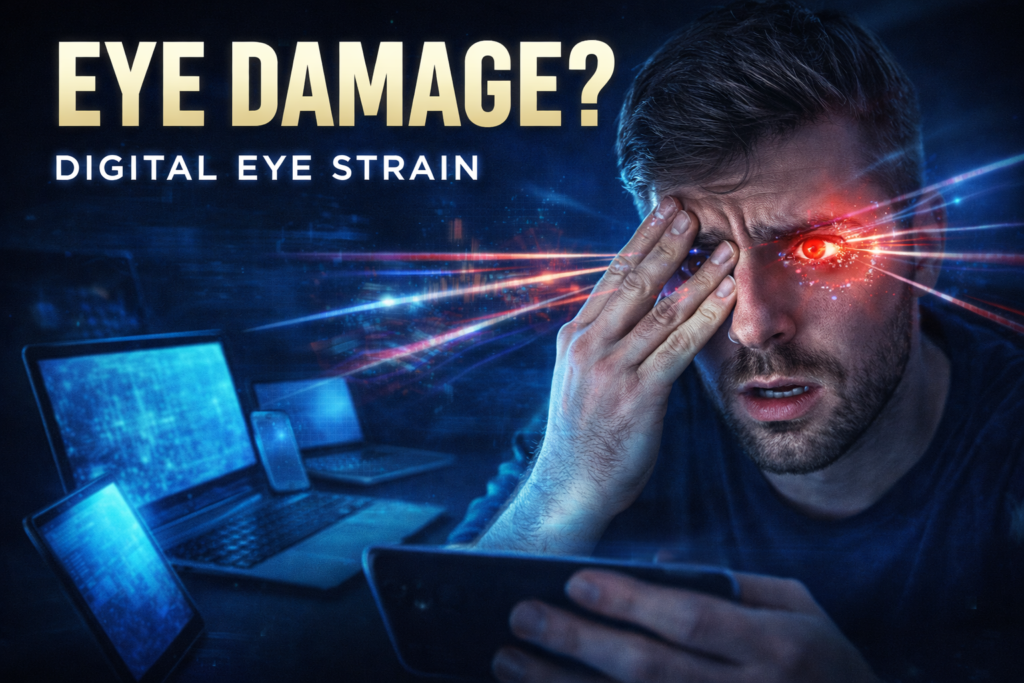
1. Eye Strain & Digital Eye Fatigue
One of the oldest, but also very widespread, consequences of excessive use of screens is eye strain.
Common symptoms:
- Burning or Dry Eyes
- Redness
- Heaviness around eyes
- Lack of focus
Why it happens:
- Blinking less often due to staring at screens
- Blue light exposure
- Long focus on close objects
The resulting condition is commonly referred to as Digital Eye Strain or Computer Vision Syndrome.
It could result in chronic irritation and vision difficulties if neglected.
2. Headaches and Blurred Vision Due to Excessive Screen Time
Ever get a dull headache after long screen sessions?
That’s not random.
Screen-related headaches develop due to the following reasons:
- Overuse of the eye muscles
- Bright screens
- Poor lighting
- Incorrect distance for viewing
Blurred vision often follows because the muscles of your eyes get tired and lose focus temporarily.
If this does not happen less often, it is a sure sign your screen habits should be fixed.
3. Poor Posture: Neck, Back & Shoulder Pain
It is one of the most observable physical damage.
The most common postural Problems
- Forward Head Posture
- Rounded shoulders
- Slouched lower back
Spending hours:
- looking Down at phones
- Tending towards Laptops
- Sitting Without Support
Puts stress on your:
- Neck
- Spine
- Shoulders
This, in the long run, results in pain, stiffness, and loss of mobility.
4. Reduced Attention Span
Too much screen time affects the brain in the following ways:
- Seek constant stimulation
- Quickly switch between tasks
- No deep focus
As a result,
- Reading becomes hard
- Decreasing Concentration
- You feel irritable without screens
This immediately impacts:
- Work productivity
- Learning ability
- Decision-making
Your brain becomes exhausted quickly, even when you do simple tasks.
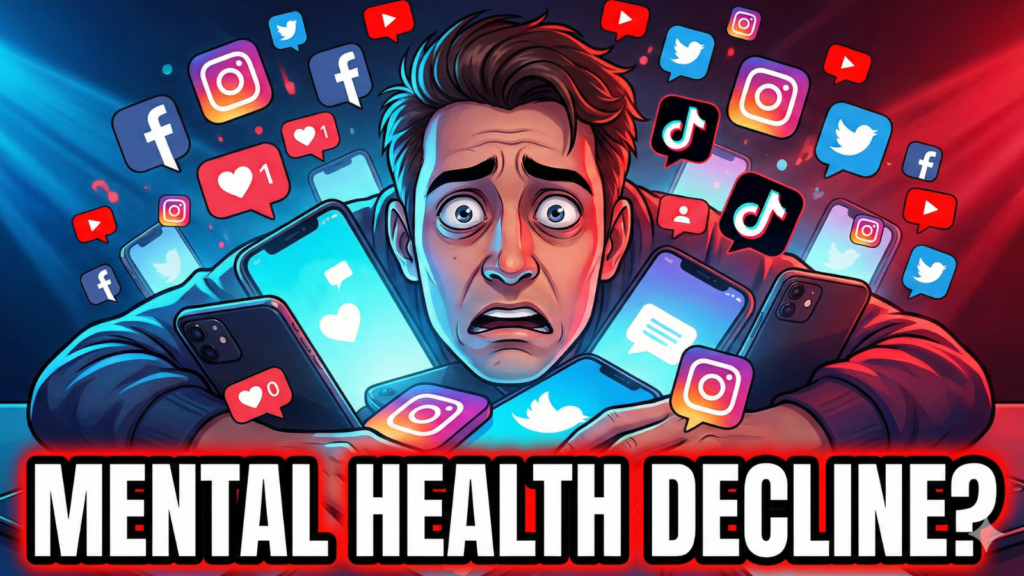
5. Mental Exhaustion & Brain Fog
You may not be physically tired, but feel:
- Drained in the head.
- Confused
- Slowness in thinking
This, in essence, is screen-induced mental fatigue.
Why it occurs:
- Continuous information intake
- Notifications overload
- Visual and cognitive strain
Mental exhaustion reduces creativity, motivation, and emotional balance.
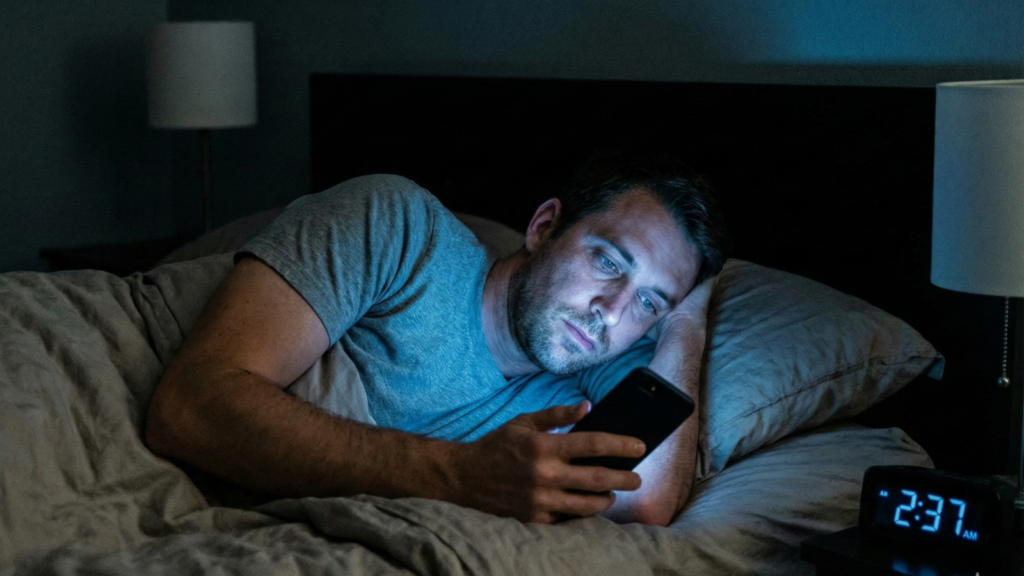
6. Sleep Disruption Due to Blue Light
This is where your screen time negatively affects your health.
Blue light from screens:
- Helps in delaying sleep onset
- Reduce quality of sleep
The late hours of browsing or laptop usage make you believe it is daytime.
All the following are caused by poor sleep
- Less energetic
- Poor recovery
- More irritability
And the cycle begins again every day.
Frequently Asked Questions (FAQ) Excessive Screen Time
❓ How much screen time is safe on a daily basis?
There is no specific number, but timeouts are imperative.
❓Can screen time permanently damage eyes?
Prolonged overuse can lead to deteriorated vision and chronic strain on the eye
❓Can cutting down on screen use lead to greater mental clarity?
Oh absolutely. Every little bit helps.
MUST READ ARTICLE : How I Reduced Screen Time to Improve Sleep
NOTE: This is for educational purposes only. Not medical advice. Consult a doctor for health concerns.